Best thermal monocular for coyote and hog hunting
Reach, a laser and a battery that lasts the night: the monoculars that suit calling stands and hog fields, from $899.
AGM ReachIR LRF 25-3848.8/10Read the review
Short answer: for coyote and hog hunting, buy as much lens and sensor as you can afford, and a laser rangefinder if you call coyotes over open ground. Our hunting ranking puts the Pulsar Telos LRF XP50 ($3,699.97) first. The AGM ReachIR LRF 25-384 ($1,895) is the cheapest way to get a laser and a 25 mm lens, and the AGM Taipan V2 19-384 ($1,195) is the value pick for hogs in fields and around feeders.
What coyote and hog hunting asks of a thermal
A coyote stand and a hog field ask for the same three things. First, you need to spot heat early, often far out across a pasture or a cut field. Second, you need to know what that heat is before you act: a coyote or the neighbor's dog, a sow or a calf. Third, the device has to keep working through a long, cold night with your hands half frozen.
That is why our hunting ranking re-weights the same ten criteria: reach, sensor resolution, sensitivity (NETD) and a rangefinder count more; the screen, the warranty and the price count less. The models at the top are not the cheapest, but they are the ones that answer "what is it and how far?" soonest.
Our picks, with the hunting scores
| Model | Hunting score | Price (Nov. 9, 2026) | Sensor and lens | Reach | Laser | Battery |
|---|---|---|---|---|---|---|
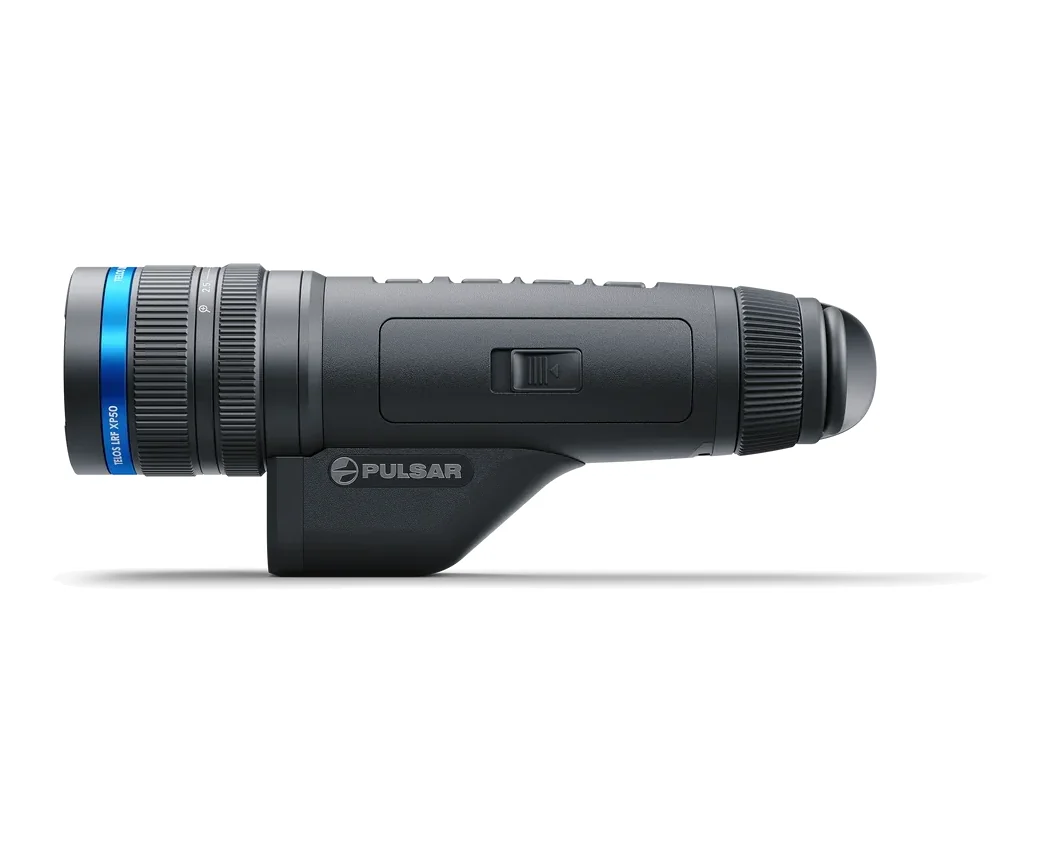
| Pulsar Telos LRF XP50 | 9.2/10 | $3,699.97 | 640×480, 50 mm, <18 mK | 1,765 m | 1,000 m | Up to 8.5 h, swappable |
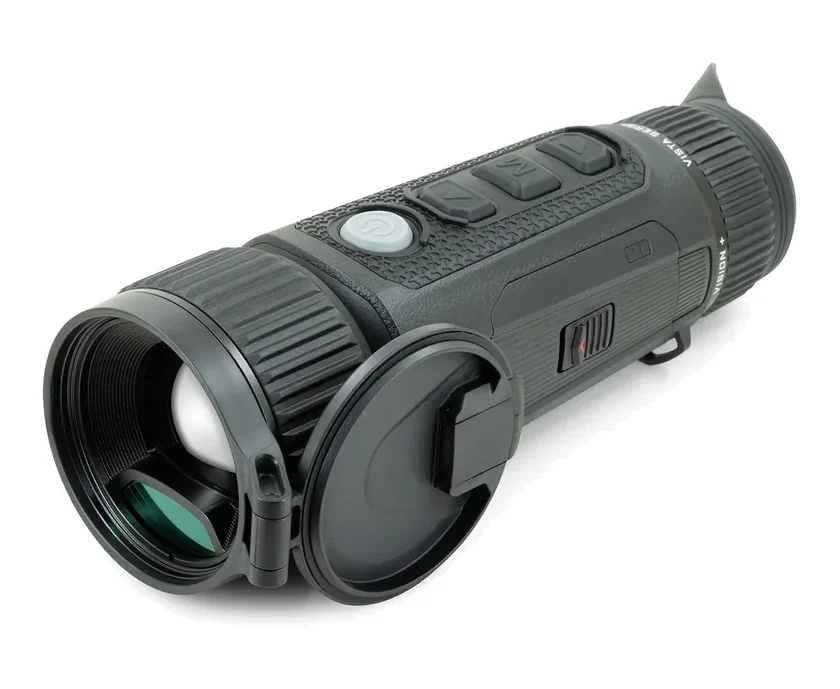
| Nocpix Vista H35R | 9.1/10 | $3,300 | 640×512, 35 mm F0.9, ≤15 mK | 1,750 m | 1,097 m | Up to 5.5 h, swappable |
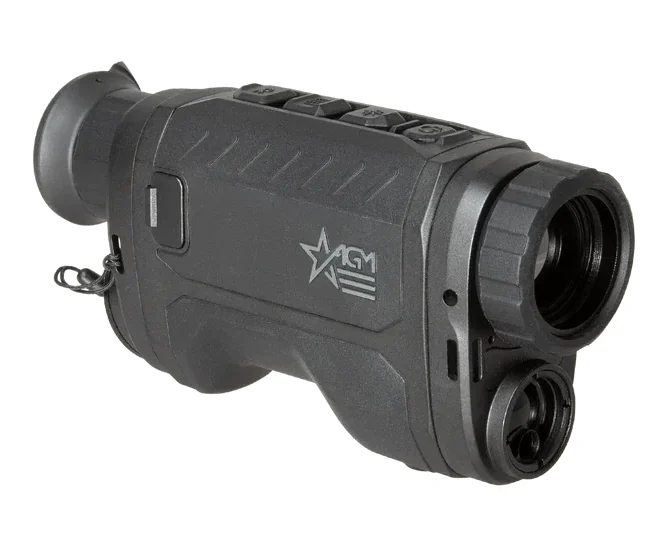
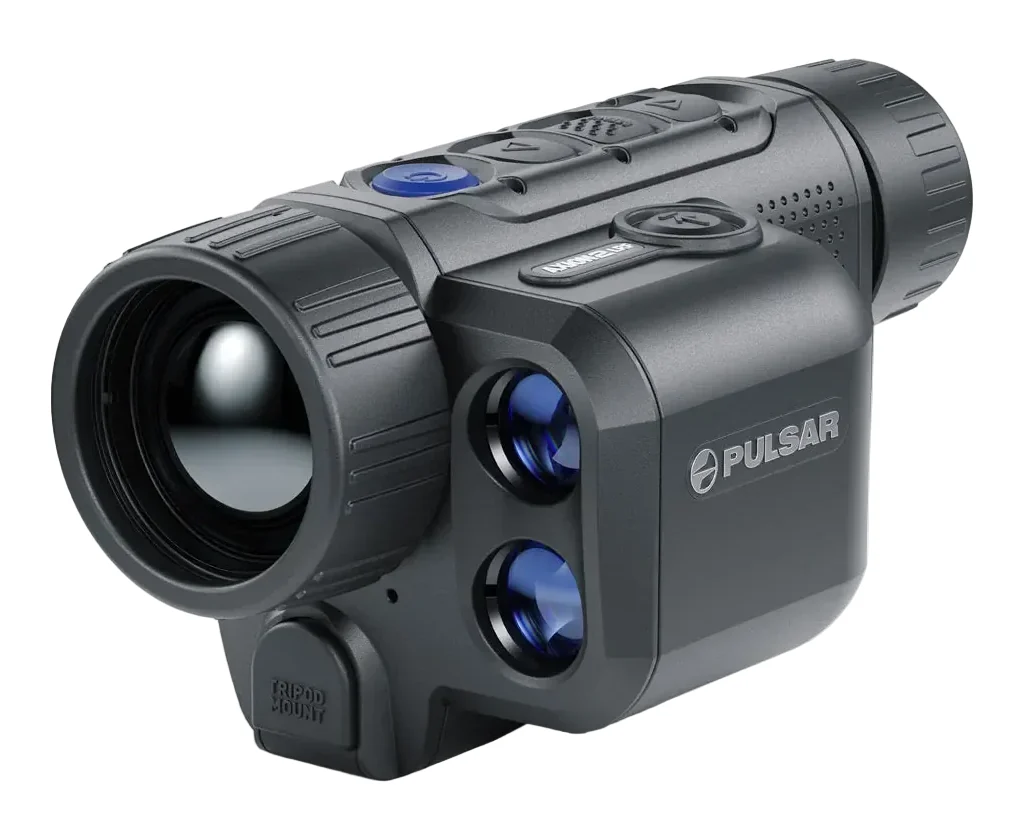
| AGM ReachIR LRF 25-384 | 8.8/10 | $1,895 | 384×288, 25 mm, <20 mK | 1,250 m | 1,000 m | Up to 4.5 h, two 18650 included |
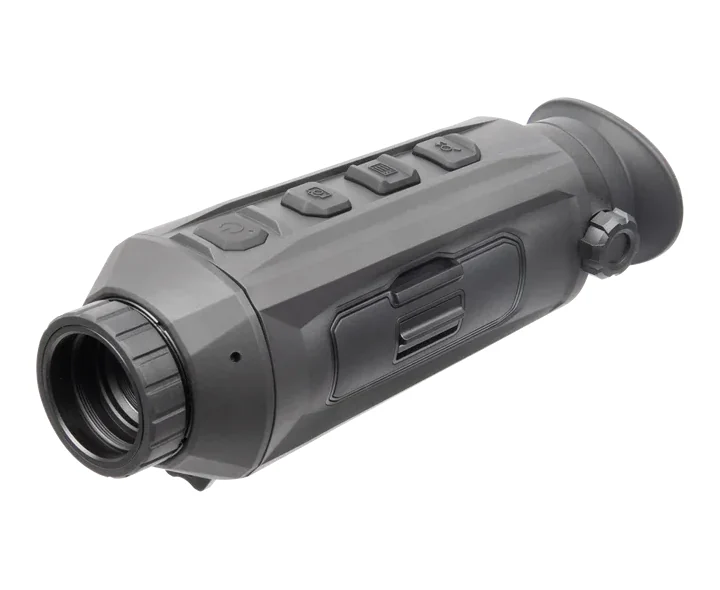
| AGM Taipan V2 19-384 | 8.7/10 | $1,195 | 384×288, 19 mm, <20 mK | 950 m | No | Up to 6.5 h, two 18650 included |
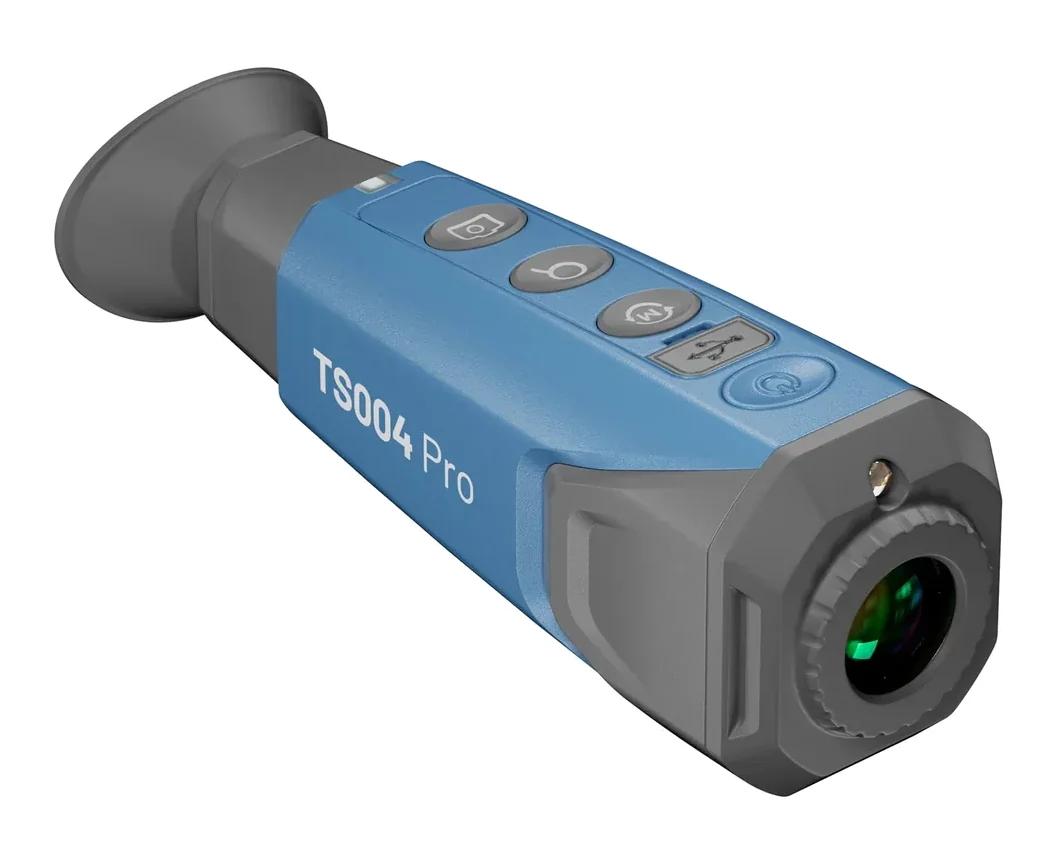
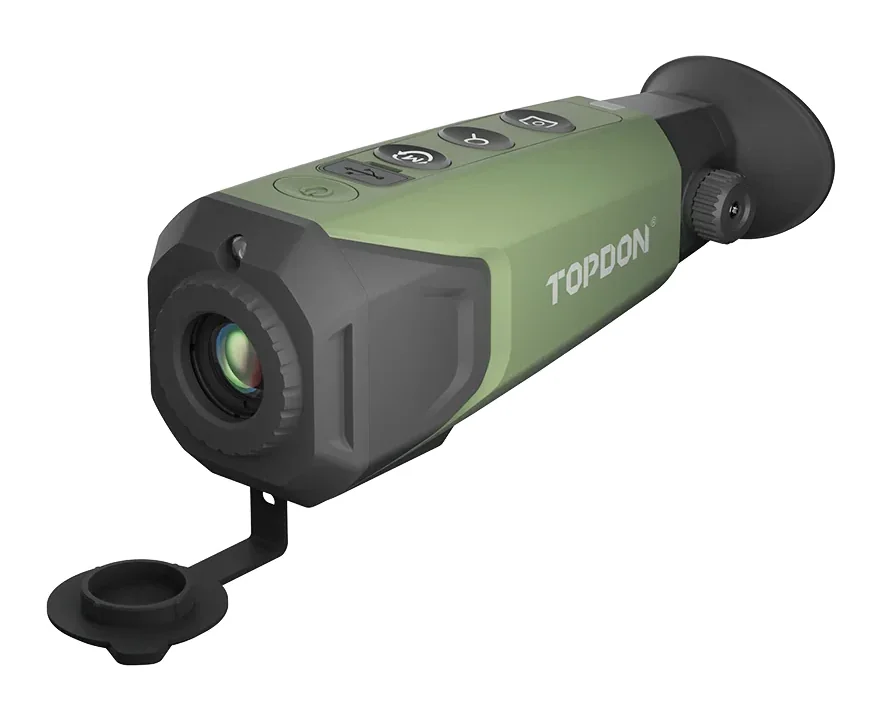
| TOPDON TS004 Pro | 8.6/10 | $899 | 384×288, 19 mm | 950 m | No | Up to 10 h, built in |
The Pulsar Axion 2 LRF XG35 scores 9.0/10 with hunting weights and packs a 640 sensor and a laser into 350 g, but it was shown sold out on the Pulsar US store on November 9, 2026. If a dealer has one near its $2,999.97 list price, it belongs on this list.
Coyote calling: reach and a laser
Calling coyotes over open ground is where a long lens earns its keep. Dogs often hang up at the edge of what you can see, circle downwind and come in from where you least expect. The Pulsar Telos LRF XP50 has the longest computed reach in our list (1,765 m), the lowest NETD Pulsar lists here and up to 8.5 hours on one pack. The catch is 720 g and $3,699.97.
For most callers, the AGM ReachIR LRF 25-384 is the sweet spot. Its 25 mm lens on 12 µm pixels gives a computed reach of 1,250 m, recognition at around 310 m (340 yards), and the built-in laser ranges to 1,000 m. Knowing that the coyote sitting out there is at 280 yards, not 180, changes your decision. You also get two 18650 cells in the box and a 5-year warranty, for $1,804.97 less than the Telos.
Hogs in fields and around feeders
Hog hunting is often a little closer and a lot longer. You glass the same field or feeder for hours, a sounder shows up, and you need to count bodies and pick out the big ones. A sharp 384 sensor with low NETD does most of that work, which is why the AGM Taipan V2 19-384 is our value pick: a sensor rated below 20 mK, a 19 mm lens (about 240 m recognition), two batteries in the box and a 5-year warranty for $1,195.
If your fields are big and you want the sharpest picture, the Nocpix Vista H35R is the No. 1 in our main ranking: a 640×512 sensor at ≤15 mK behind a fast F0.9 lens, a laser and 5 years of warranty. On a humid Southern night, when the ground and the animals sit close in temperature, that low NETD keeps outlines clean.
On a tighter budget, the TOPDON TS004 Pro ($899) has the same 19 mm lens and 384 resolution as the Taipan and the longest battery of the lot. Its <40 mK rating and 1-year warranty are what you give up.
AGM Taipan V2 19-3848.8/10Read the review
Thermal or night vision for coyotes and hogs?
For finding coyotes and hogs, thermal wins. It sees heat, so a warm animal shows up in total darkness, in light fog and through thin cover, long before a light or a night vision device picks it up. Night vision shows a more natural picture and helps you read terrain, but it needs some light or an infrared illuminator, and its reach stops where the beam stops.
Many hunters end up using a thermal monocular to find and judge, and a separate optic on the rifle. Our thermal vs night vision guide goes through the trade-offs in detail.
Before your first night out
- Read your state wildlife agency rules on night hunting, thermal optics and the species you are after.
- Charge everything and carry a spare battery or a USB power bank, depending on the model.
- Learn the controls in the daylight at home: palette, zoom, brightness and recording.
- Use white hot or black hot to scan, and keep the screen brightness low to protect your night vision.
- Scan slowly from left to right, pause on anything bright, then range it if your monocular has a laser.
Want to see how far each model would work on your own ground? The detection range calculator gives detection, recognition and identification distances for each lens and sensor.
Figures from official manufacturer pages and US prices checked on November 9, 2026. Images: manufacturers. How we score: see our methodology.
Our selection
Three rated monoculars mentioned in this guide, at checked prices.
Frequently asked questions
What is the best thermal monocular for coyote hunting?
With our hunting weights, the Pulsar Telos LRF XP50 ($3,699.97) leads at 9.2/10. For most coyote callers, the AGM ReachIR LRF 25-384 ($1,895) is the best value: a 25 mm lens, a 1,000 m laser and a 5-year warranty.
What is the best thermal monocular for hog hunting?
The AGM Taipan V2 19-384 ($1,195) is our value pick for hogs: a 384 sensor rated below 20 mK, two batteries in the box and 5 years of warranty. For big fields and the sharpest picture, the Nocpix Vista H35R ($3,300).
What is the best budget thermal monocular for coyote hunting?
The TOPDON TS004 Pro at $899 has a 384 sensor and a 19 mm lens, enough to recognize a coyote at around 240 m in our calculator. Our budget ranking lists every model up to $1,200.
Do I need a rangefinder on a thermal monocular?
Not to find animals, but it helps a lot on open ground where distances are hard to judge at night. The four laser models in our list start at $1,895.
Is it legal to hunt coyotes and hogs with thermal?
It depends on your state, the species, the land and the season. Check with your state wildlife agency before you hunt.