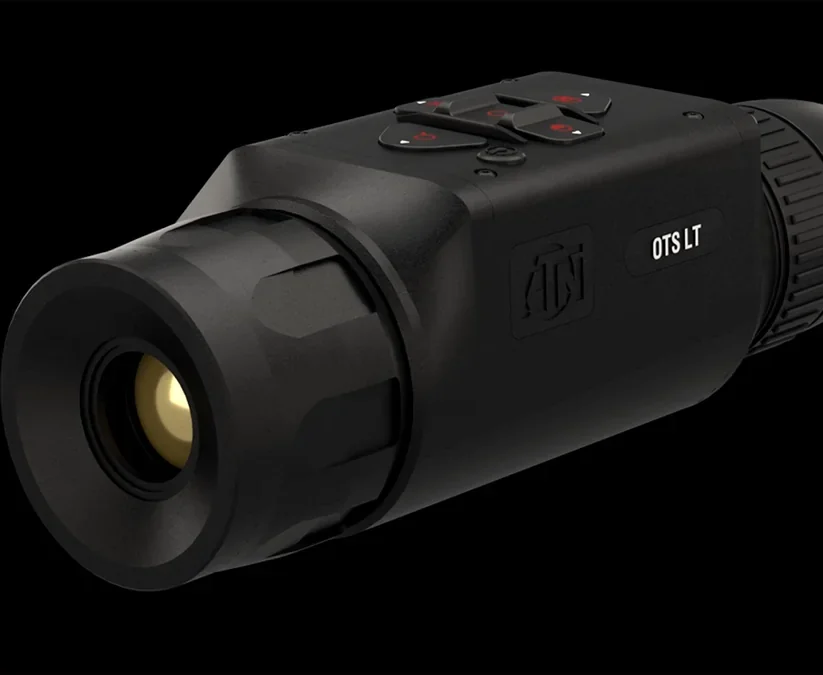
Thermal vs night vision: which one should you buy?
Thermal sees heat, night vision amplifies light: what each one shows, where each one fails, and which to buy first.
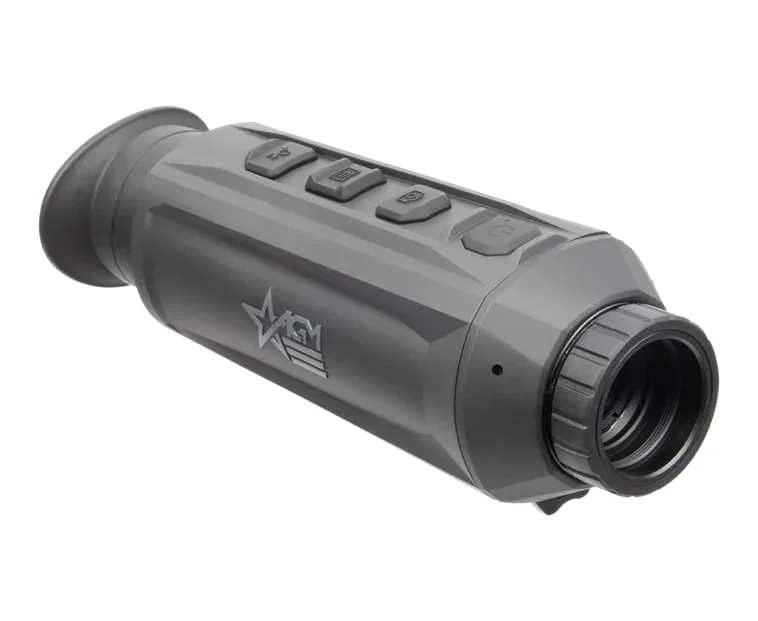
AGM Taipan V2 19-3848.8/10Read the review
Short answer: buy thermal if your goal is to find animals or people in the dark, in light fog or in brush; it sees heat, so it works in total darkness. Buy night vision if you need to recognize details, read the ground or move around at night; it shows a normal-looking picture but needs some light. For most hunters scanning fields, thermal is the better first tool.
The quick comparison
| Thermal | Night vision | |
|---|---|---|
| What it senses | Heat (long-wave infrared) | Visible and near-infrared light |
| Needs light? | No | Yes, or an IR illuminator |
| Total darkness | Works | Needs an illuminator |
| Light fog, haze, smoke | Usually better than the eye | Struggles |
| Brush and tall grass | Shows warm shapes through gaps and thin cover | Hidden like in daylight |
| Recognizing details | Shapes and outlines | Textures, faces, antlers in good light |
| Walking and reading terrain | Hard: cold ground looks flat | Easy |
| Daytime use | Yes | Digital models only |
That table explains why hunters often end up with both: a thermal to find the animal, and a day/night optic or plain daylight to confirm it. If you only buy one device to *find* things in the dark, buy thermal.
How thermal works
Everything above absolute zero gives off infrared energy, and the warmer it is, the more it gives off. A thermal monocular focuses that energy through a germanium lens (glass would block it) onto a microbolometer: a grid of tiny sensors whose resistance changes as they warm up. The electronics turn those changes into an image where warm is bright (white hot) or dark (black hot), or into a color palette.
The sensor grid sets the detail: 256×192, 384×288 or 640×480 pixels on the models we compare. The lens and the size of each pixel set how far you can see. A sensitivity figure called NETD, in millikelvin, tells you how small a temperature difference the sensor can separate. We explain all three in our specs guide.
The consequence is simple: thermal does not care about light. A coyote in a pitch-black field at 2 a.m. is as visible as one at dusk, as long as it is warmer than the grass around it.
How night vision works
Classic night vision uses an image intensifier tube: incoming light hits a photocathode, the electrons are multiplied and strike a phosphor screen, and you see a green or white-phosphor picture. Generations (Gen 2, Gen 3) describe how well tubes do this. Digital night vision uses a sensitive camera sensor instead, often with a built-in infrared illuminator that floods the scene with light your eyes cannot see.
Either way, night vision needs photons to work with. Under a new moon in thick timber, a tube without an illuminator shows very little. With an illuminator, you see well, but only as far as the beam reaches, and animals sometimes notice it.
Which one for hunting?
- Hogs and coyotes over fields: thermal. You scan hundreds of yards and see every warm body. See our hunting ranking.
- Recovering game after the shot: thermal, by a wide margin. A downed deer stays warm for a while and shows up in brush where a flashlight misses it.
- Telling a buck from a doe at distance: night vision in good conditions shows antlers better. A 640 thermal with a long lens closes much of the gap.
- Walking to the stand without a light: night vision, or simply a red headlamp. Thermal shows animals, not the root that trips you.
- Checking cattle, coyotes near the chicken run, the back fence: thermal. A $410 to $550 model like the TOPDON TS004 or the AGM Taipan V2 10-256 does this well.
What it costs in 2026
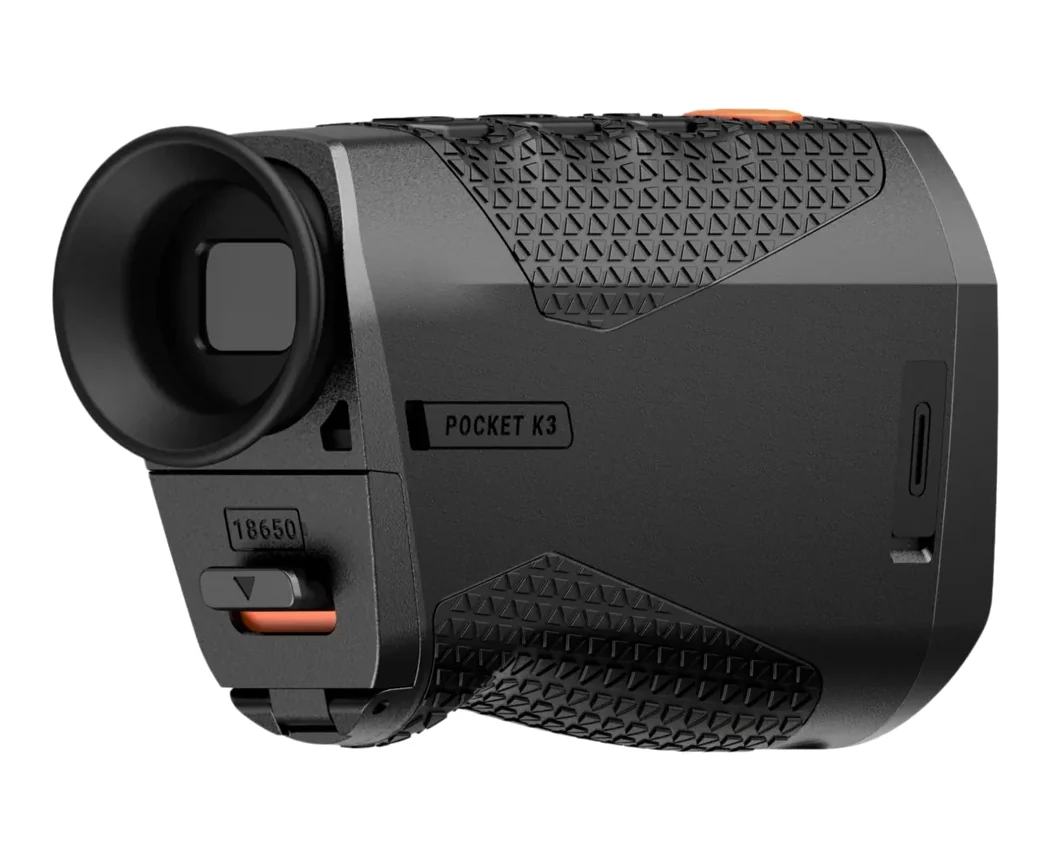
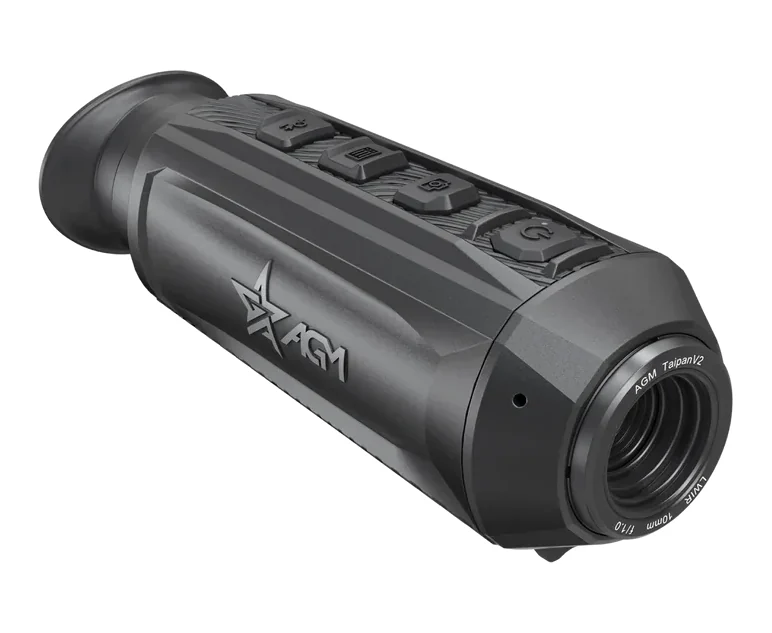
On November 9, 2026, the 14 thermal monoculars in our comparison ranged from $409.99 (TOPDON TS004, on sale) to $3,699.97 (Pulsar Telos LRF XP50). The sweet spot for most buyers is $800 to $1,200, where you get a 384×288 sensor: the RIX Pocket K3 at $799 on sale and the AGM Taipan V2 19-384 at $1,195 are good examples.
Night vision spans a wider range, from inexpensive digital monoculars to tube-based devices that cost as much as a premium thermal. We do not rank night vision devices on this site, so we will not quote prices we have not checked.
Which thermal, then? For most hunters and landowners, the AGM Taipan V2 19-384 at $1,195 is the balanced choice: a 384 sensor rated below 20 mK, a 19 mm lens, two batteries in the box and a 5-year warranty. Walking the woods on a tighter budget, the RIX Pocket K3 ($799 on sale) is lighter and wider. Our guide to the best thermal monoculars under $1,000 compares the four cheapest.
Where thermal falls short
Thermal is not magic. On a warm, humid evening, ground, rocks and animals can sit within a couple of degrees of each other and the picture goes flat; a sensor with a low NETD helps. Rain and dense fog absorb long-wave infrared, so range drops. Through a window, you see a reflection of yourself, not the yard.
And it shows heat, not identity. A calf and a hog can look alike at 300 yards on a 256 sensor. That is why our range guide separates detection, recognition and identification: the distance at which you see "something warm" is roughly four times longer than the distance at which you know what it is.
Figures from official manufacturer pages and US prices checked on November 9, 2026. Images: manufacturers. How we score: see our methodology.
Our selection
Three rated monoculars mentioned in this guide, at checked prices.
Frequently asked questions
Is thermal better than night vision?
For finding warm animals and people in the dark, yes. For seeing details, reading terrain and recognizing what is in front of you in good light conditions, night vision is better. Many hunters use thermal to find and a second optic or daylight to confirm.
Can night vision see heat?
No. Night vision amplifies visible and near-infrared light. Only a thermal imager senses the long-wave infrared that warm bodies give off.
Does thermal work in the daytime?
Yes. Thermal monoculars work day and night, and a warm animal in shade often stands out even at noon. Never point one at the sun: it can damage the sensor.
Which thermal monocular should I buy first?
A 384×288 model around $800 to $1,200 suits most first-time buyers: the RIX Pocket K3 ($799 on sale) for woods, the AGM Taipan V2 19-384 ($1,195) for mixed ground. Under $500, the TOPDON TS004 ($409.99 on sale) is a good yard and farm tool.
What is cheaper, thermal or night vision?
Entry-level digital night vision is usually cheaper than entry-level thermal. In our list, the cheapest useful thermal monocular was $409.99 on November 9, 2026 (TOPDON TS004 on sale).