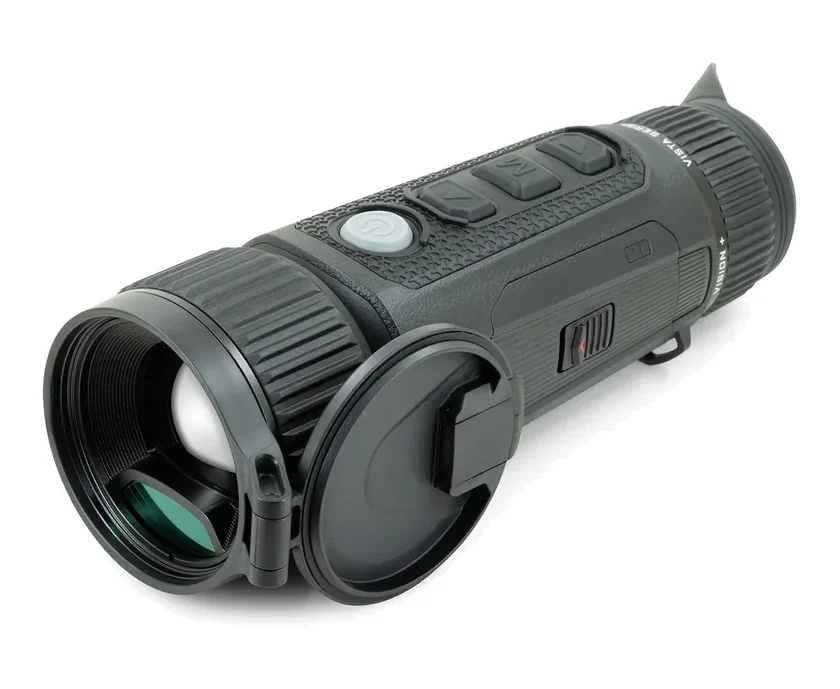
Best thermal monocular for deer recovery and tracking
After the shot, a wide view and a light body beat long reach: three picks from $799, and how to use them.
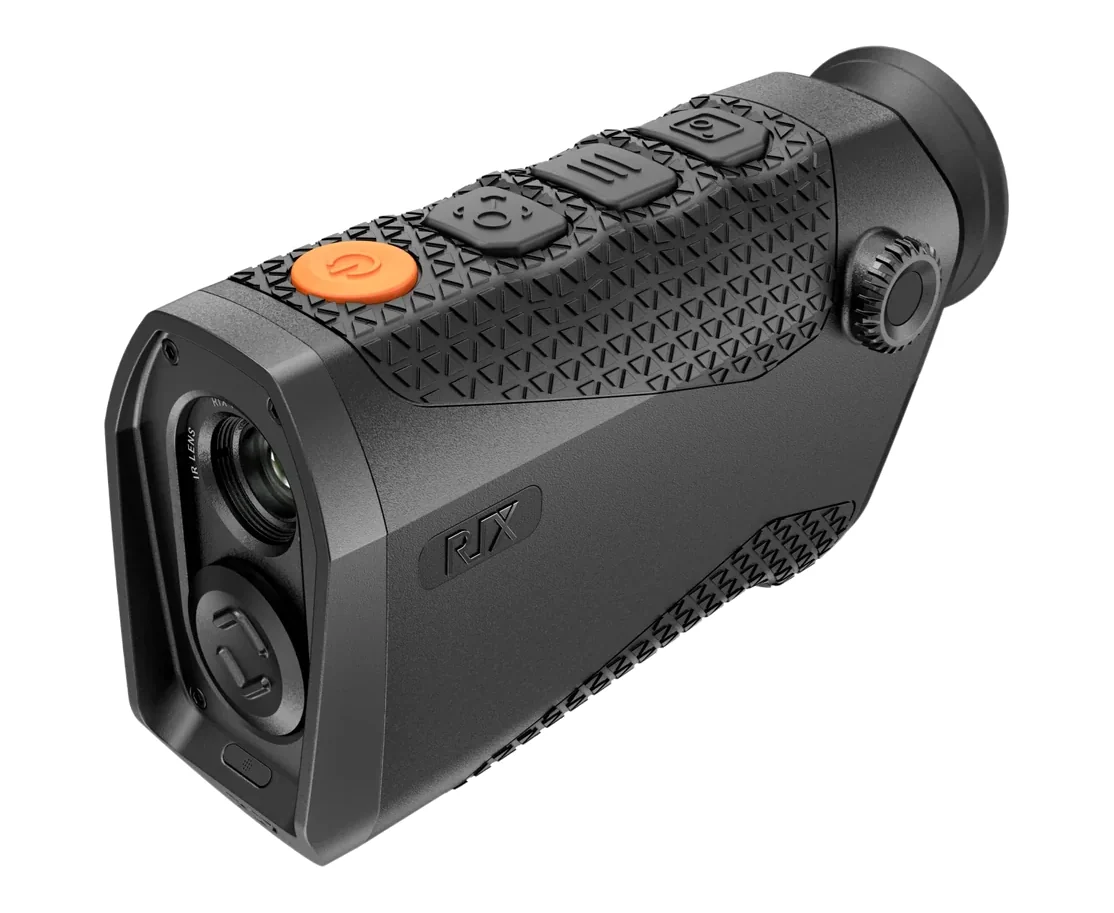
RIX Pocket K38.7/10Read the review
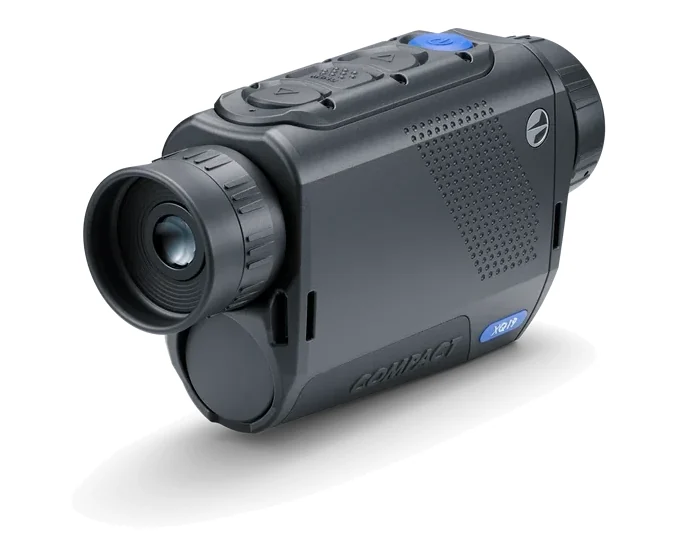
Short answer: for finding a deer after the shot, pick a wide field of view and a light body over long reach. The RIX Pocket K3 ($799 on sale) is our first choice: a 384 sensor, a 17.5° view and 213 g. The Pulsar Axion XQ19 ($1,049.97) has the widest view in our list for thick cover, and the AGM Taipan V2 19-384 ($1,195) suits hunters who also glass fields from the stand.
Why thermal helps after the shot
Every bowhunter and every rifle hunter knows the feeling: the shot looked good, the deer ran, and now it is dark and the trail goes cold in thick stuff. A thermal monocular will not replace good shot placement or patience, but it gives you something a flashlight cannot. It sees heat, so a deer lying in the brush 60 yards away can glow on the screen while it stays invisible to the eye.
Thermal also helps you decide when to back out. If you scan from the stand and see the deer bedded and still moving, you can leave it rather than push it. And on a wide, open field after dark, you can sweep the whole edge in a few seconds instead of walking grid lines.
What matters for recovery (and what does not)
- Field of view first. In the woods you are looking at 20 to 150 yards. A wide view lets you sweep the ground fast without missing a gap. Our three picks all sit between 13.8° and 19.5°.
- Sensor resolution second. At close range a 256×192 sensor works, but a 384×288 one makes the outline of a deer, its legs and head far easier to read among warm rocks and stumps.
- Weight and size. You will carry it on every hunt and pull it out with cold, shaking hands. Under 350 g is comfortable; the K3 is 213 g.
- Battery you can trust. A swappable 18650 or quick-change pack means a recovery never stops because the screen died.
- Reach matters least. A 35 mm lens and 1,700 m of computed reach are wasted in a creek bottom, and they narrow your view.
| Model | Field of view | Sensor and lens | Weight | Price (Nov. 9, 2026) |
|---|---|---|---|---|
| Pulsar Axion XQ19 Compact | 19.5° | 384×288, 19 mm, 17 µm | 249 g with battery | $1,049.97 |
| RIX Pocket K3 | 17.5° | 384×288, 15 mm | 213 g | $799 (sale) |
| AGM Taipan V2 10-256 | 17.5° | 256×192, 10 mm | 315 g with battery | $544.50 |
| AGM Taipan V2 19-384 | 13.8° | 384×288, 19 mm | 355 g with battery | $1,195 |
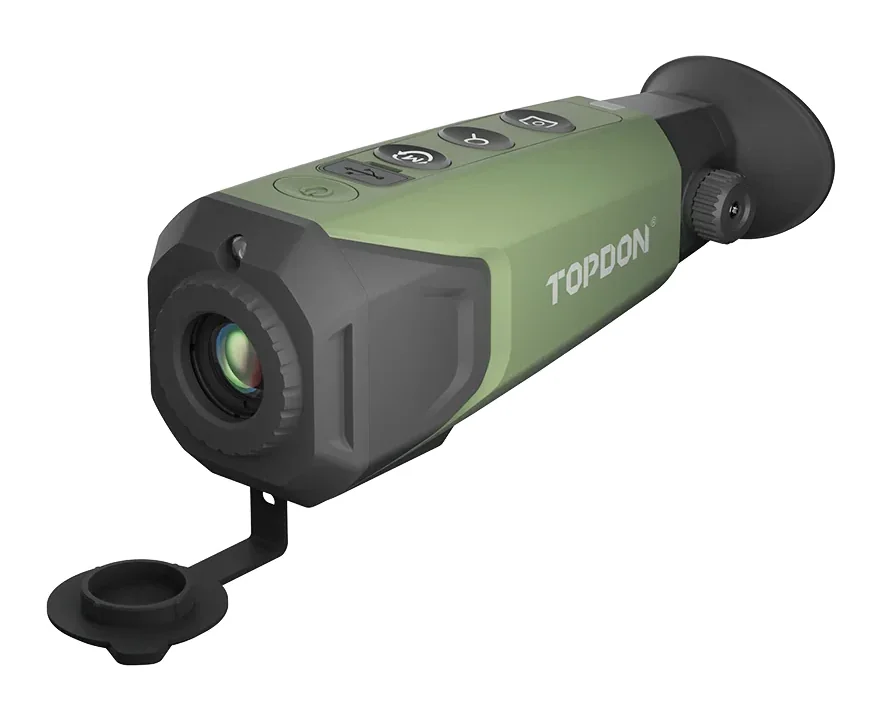
| TOPDON TS004 | 13.5° | 256×192, 13 mm | 330 g | $409.99 (sale) |
Our three picks for finding deer
RIX Pocket K3, $799 on sale. The lightest monocular in our list with a 384×288 sensor rated below 25 mK and a wide 17.5° view. It slips into a chest pocket, runs about 6 hours on a swappable 18650 cell and carries a 5-year warranty. For the hunter who wants one thermal for recovery, scouting and the walk out, this is the easy answer.
Pulsar Axion XQ19 Compact, $1,049.97. If you hunt thick timber, cedar swamps or cutovers, the XQ19's 19.5° field is the widest we compare: you see more ground with every sweep. It weighs 249 g with its APS3 quick-change pack, runs up to 8 hours and is IPX7. Its 17 µm pixels limit long reach, which hardly matters on a blood trail.
AGM Taipan V2 19-384, $1,195. For hunters who sit field edges and take longer shots, the Taipan's 19 mm lens adds reach (950 m computed) for glassing from the stand, while its 384 sensor rated below 20 mK stays sharp at recovery distances. Two batteries come in the box and AGM gives 5 years of warranty.
On a tighter budget
You do not need to spend $800 to find deer. The TOPDON TS004 at $409.99 on sale is the cheapest model we compare and runs about 11 hours, so it will outlast any recovery. The AGM Taipan V2 10-256 at $544.50 adds a wider 17.5° view and a 5-year warranty. Both use 256×192 sensors: fine at 30 to 80 yards, harder to read past that.
Our budget ranking compares every model up to $1,200, and our buying guide under $1,000 goes into the four cheapest in detail.
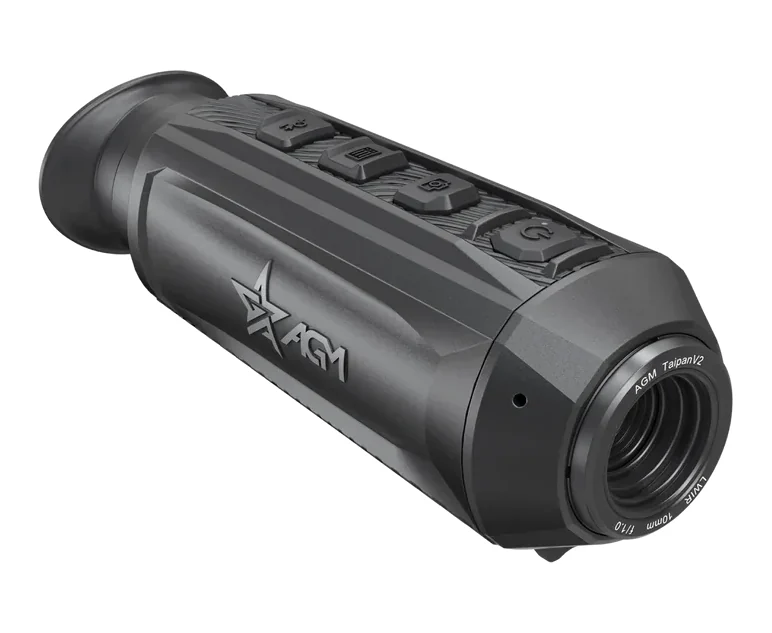
AGM Taipan V2 10-2568.5/10Read the review
How to use a thermal monocular on a recovery
- Before you climb down, scan from the stand where you last saw the deer. Height gives you a view over brush.
- Mark the spot where the deer was hit and the line it ran, then give it the time your shot calls for.
- Use white hot, low screen brightness and the widest view (no zoom) to sweep the ground in slow arcs.
- Follow the blood with your flashlight, and stop every 20 to 30 yards to scan ahead with the thermal.
- Remember that a warm spot can be a fresh bed, a rock that held the sun or another animal: walk up carefully.
Check the rules first
States treat thermal devices differently, and some treat recovery differently from hunting itself. Before you use any thermal device to find game, check your state wildlife agency rules for your season, your land and whether you can carry a weapon at the same time.
Figures from official manufacturer pages and US prices checked on November 9, 2026. Images: manufacturers. How we score: see our methodology.
Our selection
Three rated monoculars mentioned in this guide, at checked prices.
Frequently asked questions
What is the best thermal monocular for deer recovery?
The RIX Pocket K3 at $799 on sale (November 9, 2026): a 384 sensor, a wide 17.5° view, 213 g and a 5-year warranty. For thick timber, the Pulsar Axion XQ19 ($1,049.97) has the widest view in our list.
Can a thermal monocular find a dead deer?
Yes, while the body is still warmer than the ground around it. A freshly downed deer shows up clearly; after several hours in the cold the contrast fades.
Does thermal show a blood trail?
Only for a short time: fresh blood is warm but cools quickly. Use a flashlight for the trail and the thermal to find the deer.
Is a 256 sensor enough for blood trailing?
At close range, yes. The TOPDON TS004 ($409.99) and the AGM Taipan V2 10-256 ($544.50) work well within about 80 yards. A 384 sensor makes the shape much easier to read.
Should I buy a thermal monocular or a thermal scope for recovery?
For recovery, a handheld monocular is the better tool: it is lighter, it stays in your hand while you walk the trail, and you never point a rifle to look at something. Every model we compare is a handheld observation device; none mounts as a riflescope.
Is it legal to use thermal to recover deer?
It depends on the state. Some rules differ between hunting and recovery, or limit what you can carry while using a thermal. Check with your state wildlife agency.