How to choose a thermal monocular in 2026
Five steps and seven checks before you pay: your ground, your distance, sensor and lens, battery and warranty, then budget.
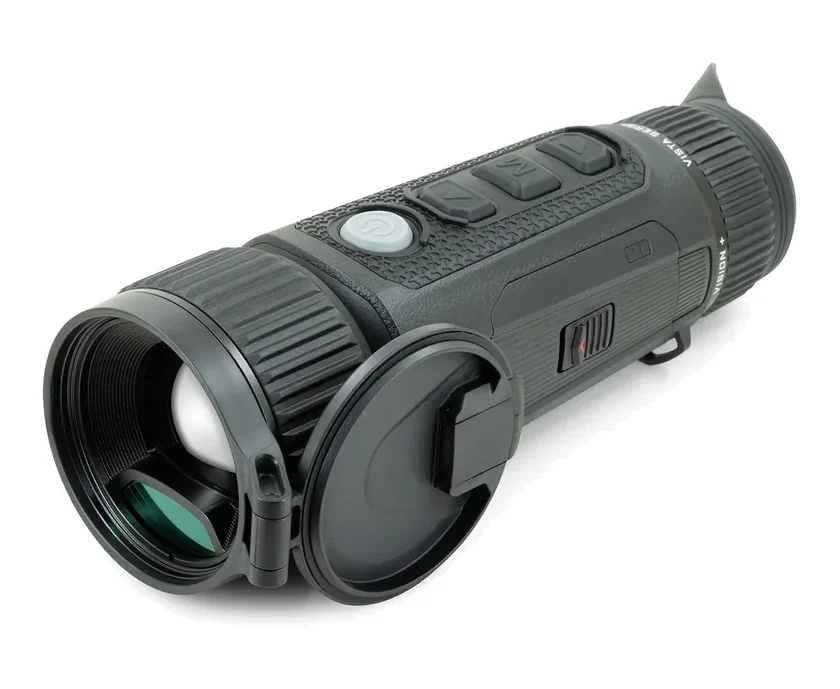
Nocpix Vista H35R9.0/10Read the review
Short answer: decide the distance at which you need to recognize an animal, pick the shortest lens that covers it, choose 384×288 or better if you can afford $800, and favor a swappable battery and a 3 to 5-year warranty. For most buyers that lands on a 384 sensor with a 19 to 25 mm lens around $800 to $1,900; the main ranking lists every model.
Step 1: describe your ground
Picture the place where you will use it most. A woodlot in Pennsylvania, a cotton field in Texas, a cattle pasture in Kansas and a backyard in Ohio need different tools. Close, broken cover rewards a wide view and a light body; long, open ground rewards reach. Most hunters fall somewhere in between, which is why 19 to 25 mm lenses are so common.
| Where you use it | What matters most | Good fits in our list |
|---|---|---|
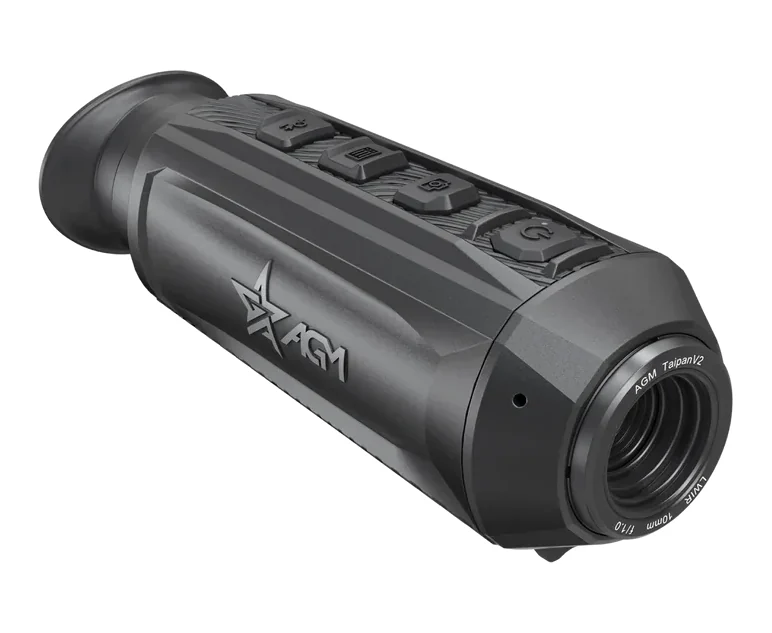
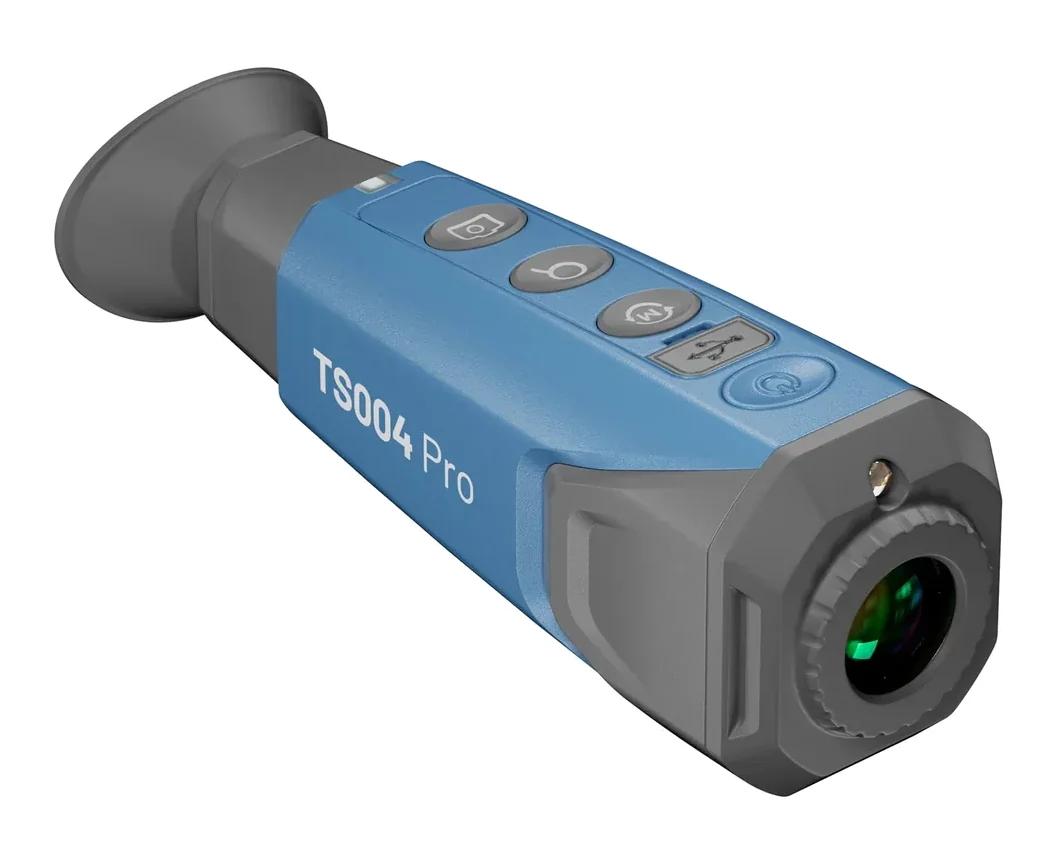
| Yard, barn, livestock checks | Price, battery, simple use | TOPDON TS004, AGM Taipan V2 10-256 |
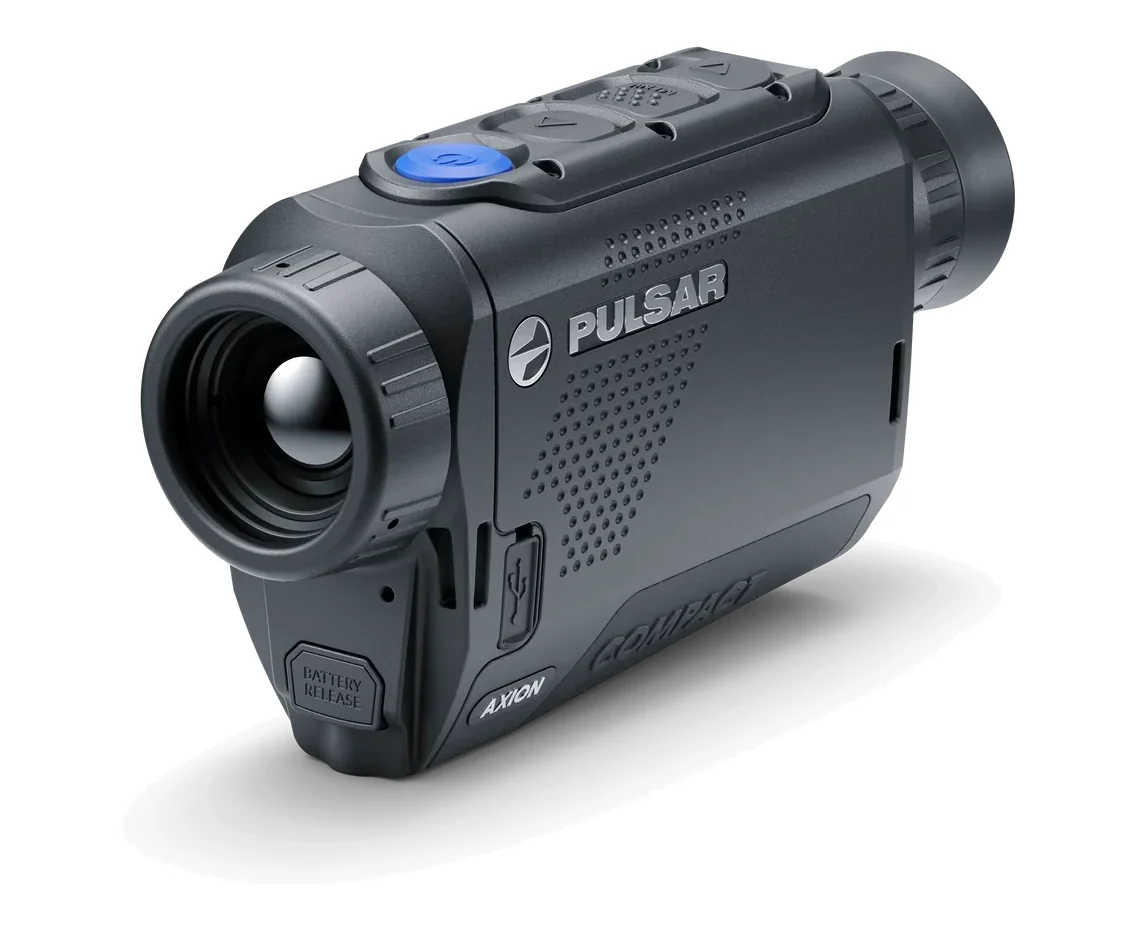
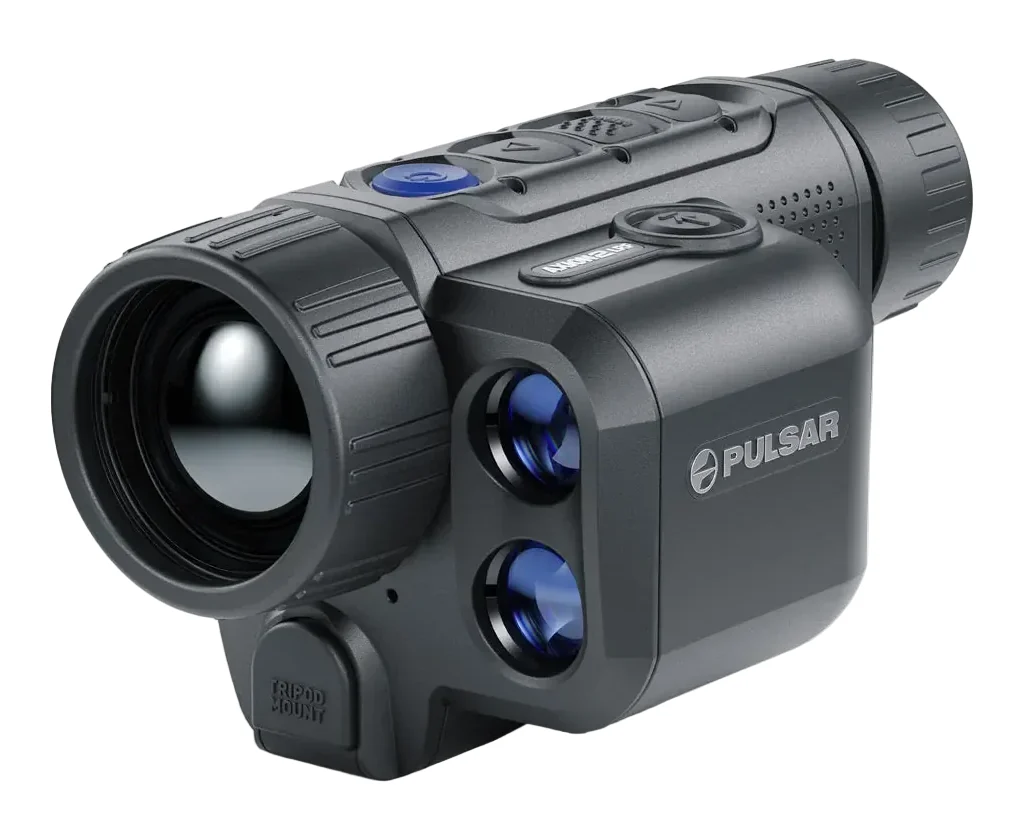
| Timber, creek bottoms | Wide field, light weight | Pulsar Axion XQ19, RIX Pocket K3 |
| Mixed ground, feeders, food plots | Balance of reach and view | AGM Taipan V2 19-384, TOPDON TS004 Pro |
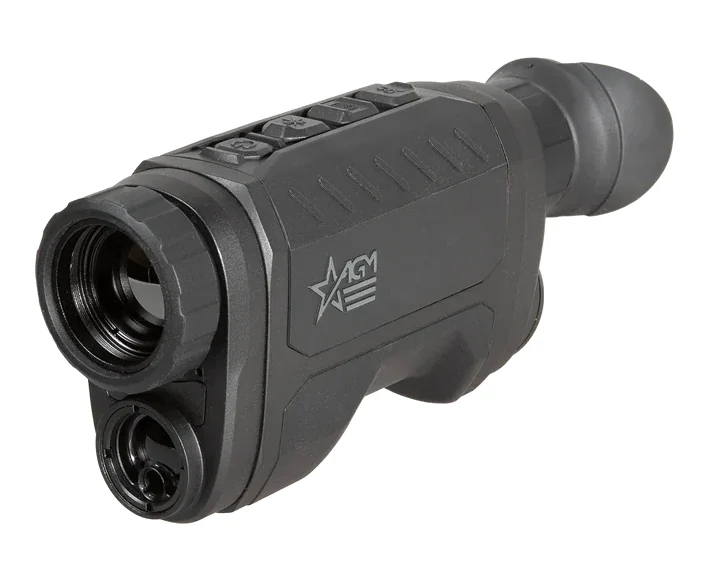
| Open fields, coyote calling | Reach, sensitivity, rangefinder | AGM ReachIR LRF 25-384, Pulsar Axion 2 LRF XG35 |
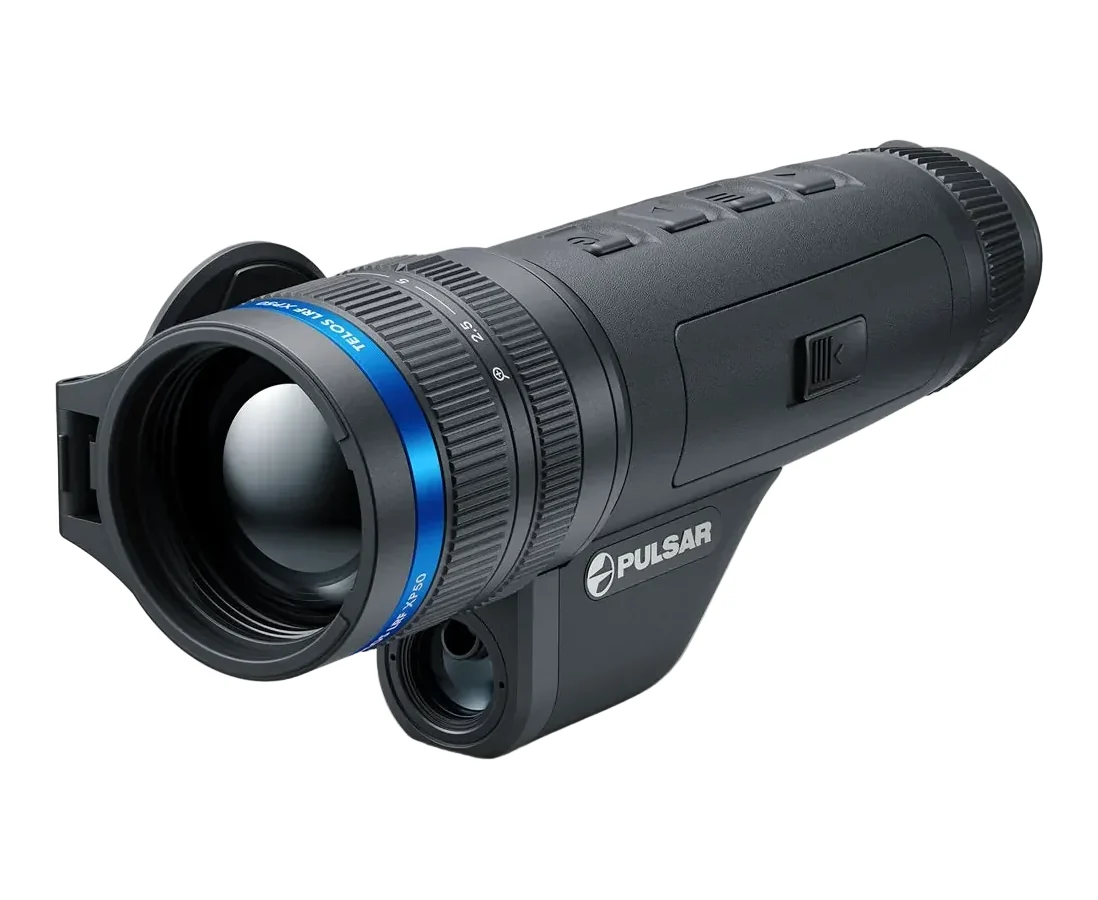
| Big country, long sits | Reach, battery, low NETD | Pulsar Telos LRF XP50, Nocpix Vista H35R |
Step 2: set the distance you need
Use recognition, not detection. Knowing that something warm is at 600 yards rarely helps; knowing it is a coyote and not a calf at 250 yards does. Our range guide explains why recognition happens at about a quarter of the advertised detection range.
- Measure your longest useful distance (a mapping app does this in seconds).
- Open the range calculator, choose the animal and read the recognition distance for a few models.
- Keep the models whose recognition distance covers yours, then prefer the widest field among them.
Step 3: sensor and lens
Pick resolution for detail and lens for reach. A 384×288 sensor is where most owners stop wishing for more; a 640 is a real upgrade if you zoom a lot or glass wide fields. Our resolution guide shows the trade-offs, and the specs guide explains NETD and pixel pitch.
Step 4: battery, weather and warranty
- Battery: brand hours are measured warm. The longest in our list are TOPDON's built-in cells (about 11 h and 10 h); the shortest are the AGM ReachIR and Vortex Veil 400 at 4.5 h per battery. A swappable cell fixes short runtimes.
- Weather: IP67 or IPX7 if you hunt rain, snow or river bottoms. Eleven of the 14 models we compare carry one.
- Warranty: a thermal is an electronic device used in frost and rain. Five years (AGM, RIX, Nocpix) or lifetime (Vortex) is worth real money against 1 year (TOPDON).
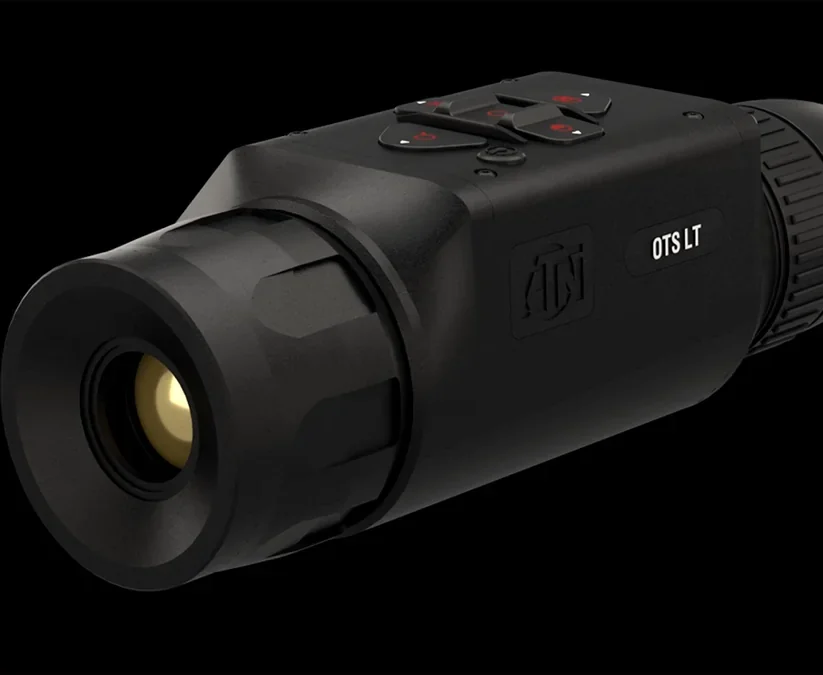
- Recording and apps: most models record photo and video and connect to a phone; the ATN OTS LT 320 lists neither.
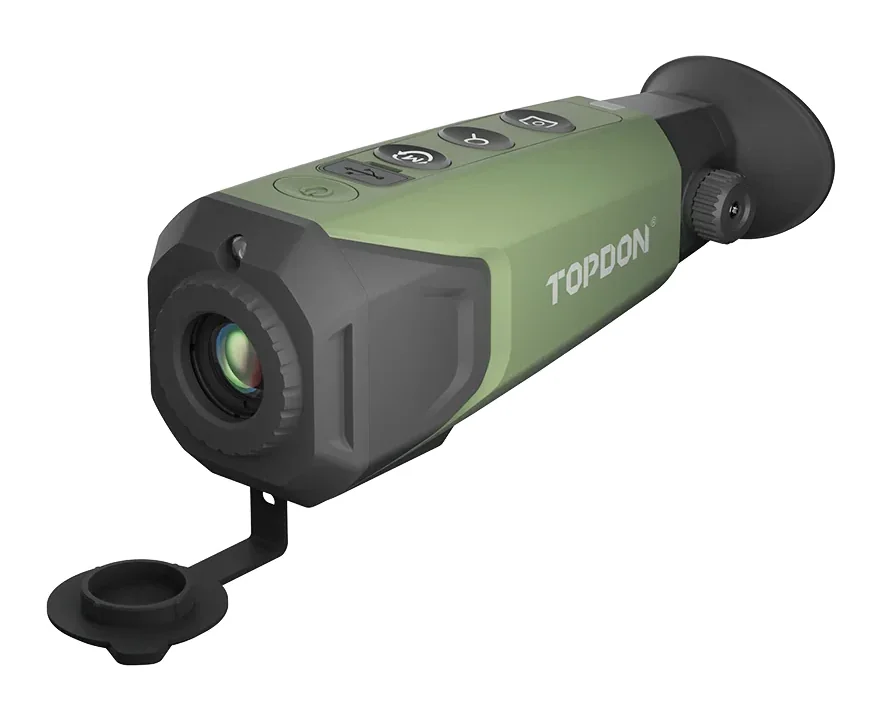
TOPDON TS0048.5/10Read the review
Step 5: set the budget
| Budget (Nov. 9, 2026) | What you get | Our pick |
|---|---|---|
| Under $600 | 256×192, short lens, great for the yard | TOPDON TS004 ($409.99 on sale) |
| $800 to $1,200 | 384×288, 15 to 19 mm, most hunting | RIX Pocket K3 ($799 on sale), AGM Taipan V2 19-384 ($1,195) |
| $1,500 to $2,300 | 384 or 400 sensors with longer lenses, a first laser | AGM ReachIR LRF 25-384 ($1,895) |
| $2,500 and up | 640 sensors, 35 to 50 mm, lasers | Nocpix Vista H35R ($3,300), Pulsar Telos LRF XP50 ($3,699.97) |
Our budget ranking covers everything up to $1,200 with value weights, and the rangefinder ranking compares the four laser models.
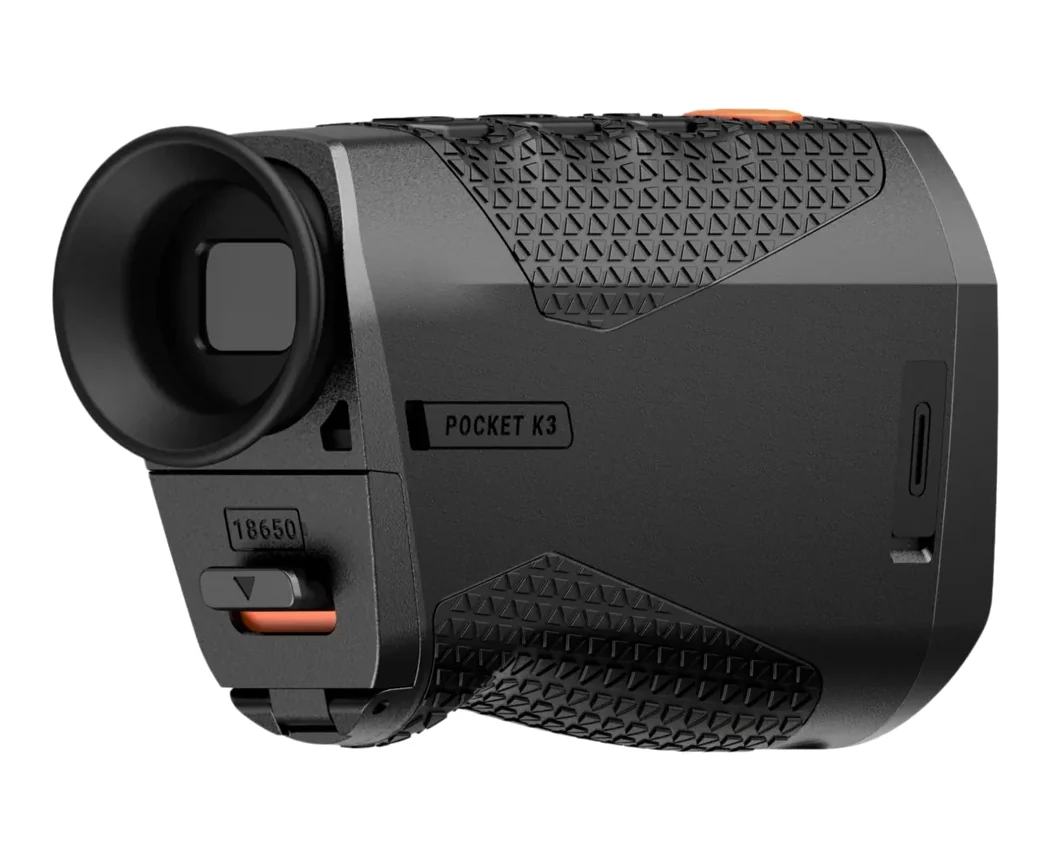 Thermal monocularRIX Pocket K3
The 7 checks before you pay
You have a shortlist of two or three models. Run each one through these seven checks; the one that passes all of them for your ground is your monocular.
- Recognition distance covers your longest useful shot or sighting. Use recognition, not the detection figure on the box.
- Sensor is 384×288 or better, unless your whole use is within about 100 yards.
- Field of view suits your cover: 15° or more for woods, 10 to 14° for mixed ground, less only for big open country.
- NETD is 25 mK or lower if you hunt humid nights or low-contrast ground; 40 mK models work, with flatter pictures on bad nights.
- Battery covers your longest night, with a spare cell or a power bank you will really carry.
- IP67 or IPX7 if you hunt in rain, snow or river bottoms.
- Warranty of 3 years or more, and a return window you can use if it does not suit you.
If two models pass, take the lighter one: the monocular that comes with you every time beats the better one left in the truck. If none passes, raise the budget one step or relax the distance. Our guide under $1,000 and our coyote and hog guide show how this works for two common buyers.
Before you order
- Check stock on the official store: on November 9, 2026, both Pulsar Axion 2 XG35 models were sold out at Pulsar US.
- Read the return policy: Pulsar US lists 15-day returns on new-condition units, RIX 30 days.
- Register the warranty: Pulsar adds 2 years to its 3-year US warranty on registration.
- Keep the box and the receipt: some warranties follow the unit (AGM, Nocpix), most need proof of purchase.
Figures from official manufacturer pages and US prices checked on November 9, 2026. Images: manufacturers. How we score: see our methodology.
Our selection
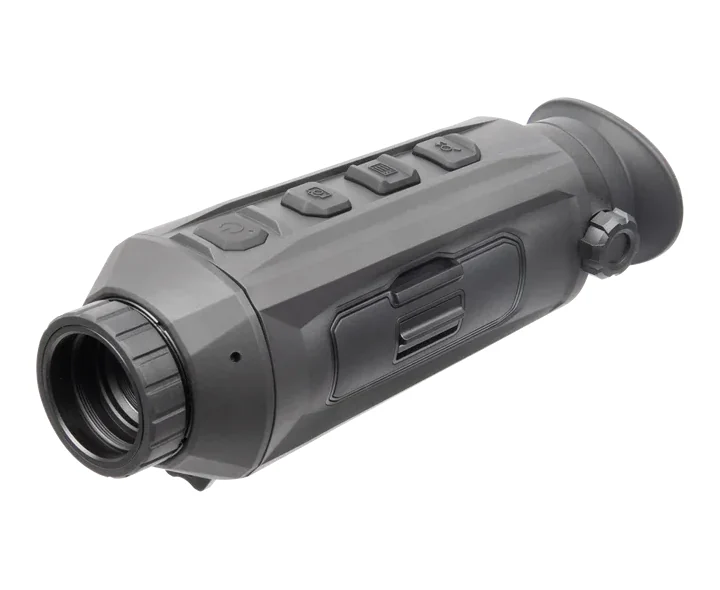
Three rated monoculars mentioned in this guide, at checked prices.
Frequently asked questions
What should I look for in a thermal monocular?
Sensor resolution (384×288 or better if your budget allows), a lens that covers your recognition distance, a NETD under 25 mK, enough battery for your longest night, IP67 or IPX7, and a warranty of 3 years or more.
What is the best thermal monocular for the money?
In our rankings, the RIX Pocket K3 ($799 on sale) leads on value and the AGM Taipan V2 19-384 ($1,195) is the balanced pick. See the budget ranking.
Is a thermal monocular better than thermal binoculars?
A monocular is lighter, cheaper and quicker to raise. Binoculars are more comfortable for long glassing sessions because you use both eyes. We only compare monoculars on this site.
How much should I spend on my first thermal monocular?
Around $800 to $1,200 buys a 384×288 sensor, which is where most owners stop wishing for more: the RIX Pocket K3 at $799 on sale or the AGM Taipan V2 19-384 at $1,195. Under $550, the 256×192 models suit short-range jobs.
Can I mount a thermal monocular on a helmet?
Some brands sell helmet mounts for specific models. Check the brand's accessory list for your exact model before buying a mount, and keep the device's weight in mind: under 350 g is comfortable.