Thermal resolution explained: 256 vs 384 vs 640
What 256, 384 and 640 sensors really change on the screen, what each step costs, and which one most buyers should get.
Nocpix Vista H35R9.0/10Read the review
Short answer: 384×288 is the resolution most buyers should aim for: clearly sharper than 256×192, at prices from about $800. 640 sensors show more detail and a wider field at the same reach, but start around $2,500 in our list, while 256×192 is fine for yards and short fields under $600. Resolution alone does not make a thermal see farther: the lens and the pixel size do.
The three resolutions side by side
| Sensor | Pixels | Typical lens in our list | Price range (Nov. 9, 2026) | Good for |
|---|---|---|---|---|
| 256×192 | 49,152 | 10 to 13 mm | $409.99 to $544.50 | Yards, barns, woodlots, short fields |
| 320×240 / 384×288 / 400×300 | 76,800 to 120,000 | 15 to 35 mm | $799 to $2,299.99 | Most hunting up to 250 yards |
| 640×480 / 640×512 | 307,200 to 327,680 | 35 to 50 mm | $2,499.97 to $3,699.97 | Open country, long calls, fine detail |
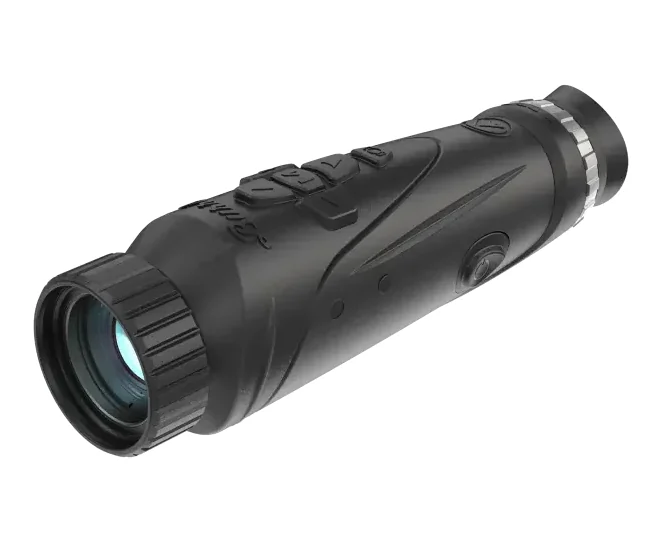
Prices are the checked US prices of the models we compare (sale prices where lower). The 320×240 ATN OTS LT 320 and the 400×300 Vortex Veil 400 and Burris BTH35 v3 sit in the middle group.
What resolution changes, and what it does not
Think of the sensor as a net and the lens as the distance between you and the net. The lens decides how big an animal appears on the sensor; the number of pixels decides how much of the scene fits around it and how finely it is drawn.
So with the same 35 mm lens and 12 µm pixels, a 640×480 sensor and a 384×288 sensor put the same number of pixels on a coyote at 300 yards. The 640 simply shows a wider slice of the field around it, with more detail in the background, and lets you zoom digitally before the picture turns to blocks.
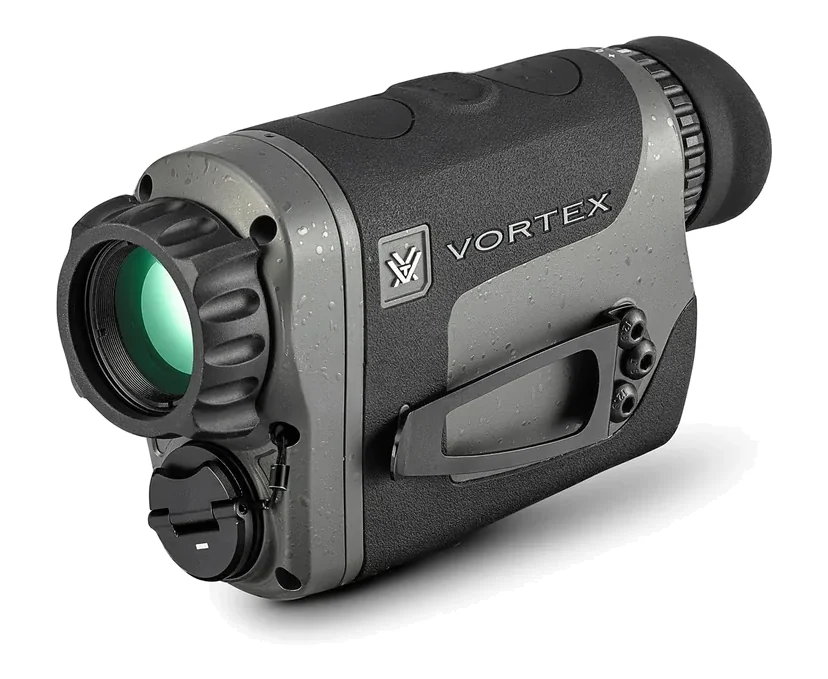
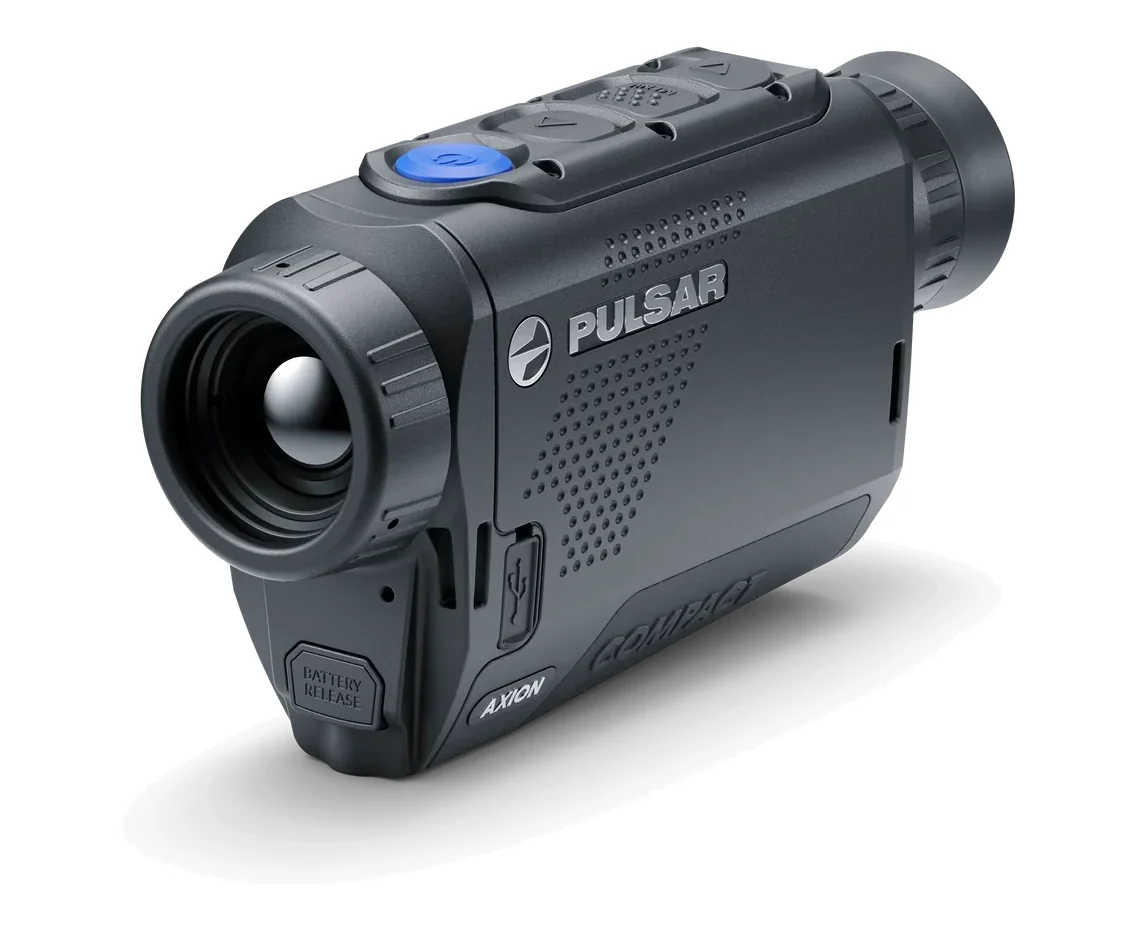
That is why our scoring separates sensor resolution (pixel count) from reach (focal length divided by pixel pitch). A model can score high on one and low on the other: the Pulsar Axion XQ19 has a 384 sensor but a short reach; the Burris BTH35 v3 has a 400 sensor and a long one.
256×192: who it is for
A 256 sensor shows warm shapes clearly at short range. It is the right tool to see whether that noise by the chicken coop is a raccoon, to check on cattle, or to find the dog at the back of the property. With a 10 to 13 mm lens, our calculator gives coyote recognition at roughly 105 to 135 m.
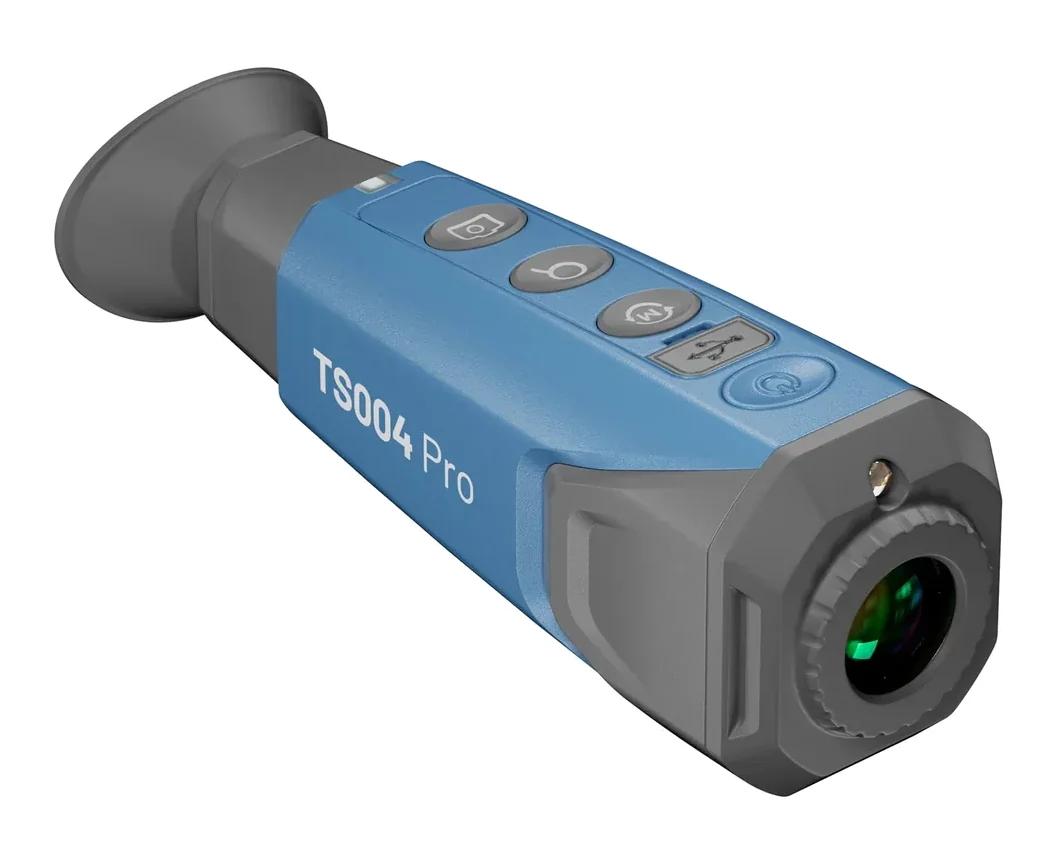
- TOPDON TS004: $409.99 on sale, 13 mm, about 11 hours of battery, 1-year warranty.
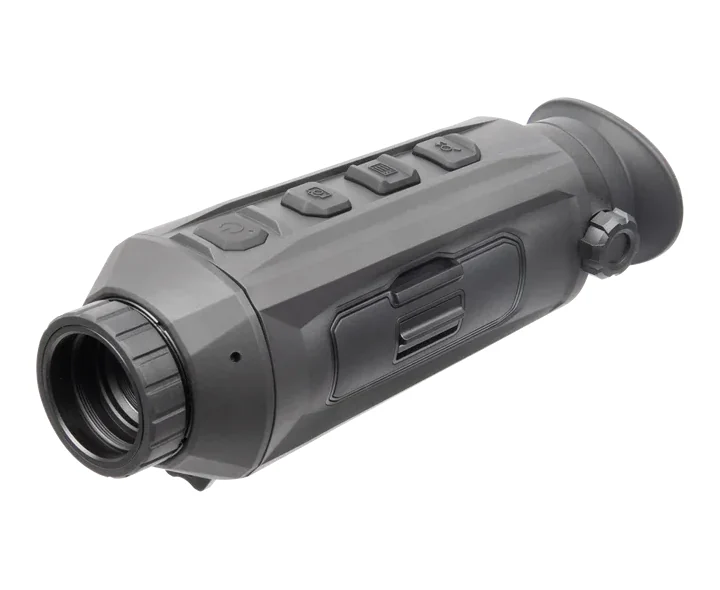
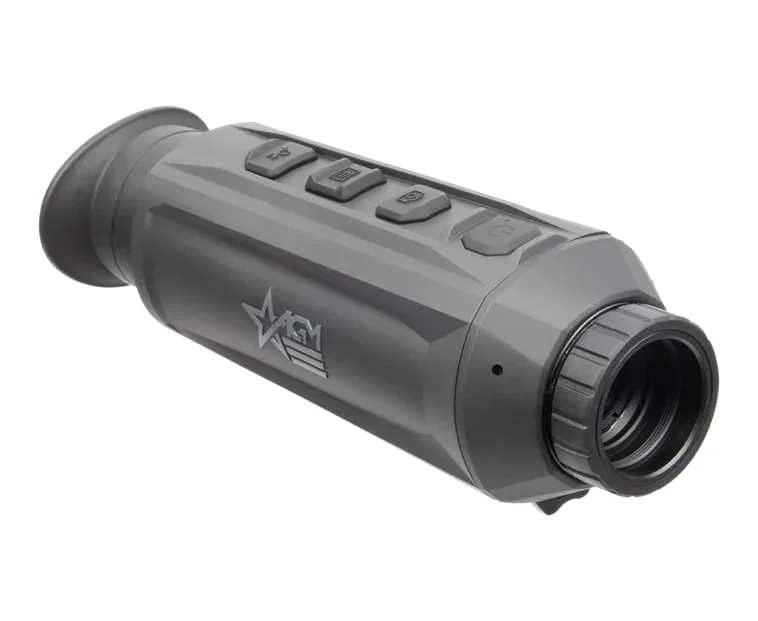
- AGM Taipan V2 10-256: $544.50, 10 mm with a wide 17.5° field, two swappable batteries, 5-year warranty.
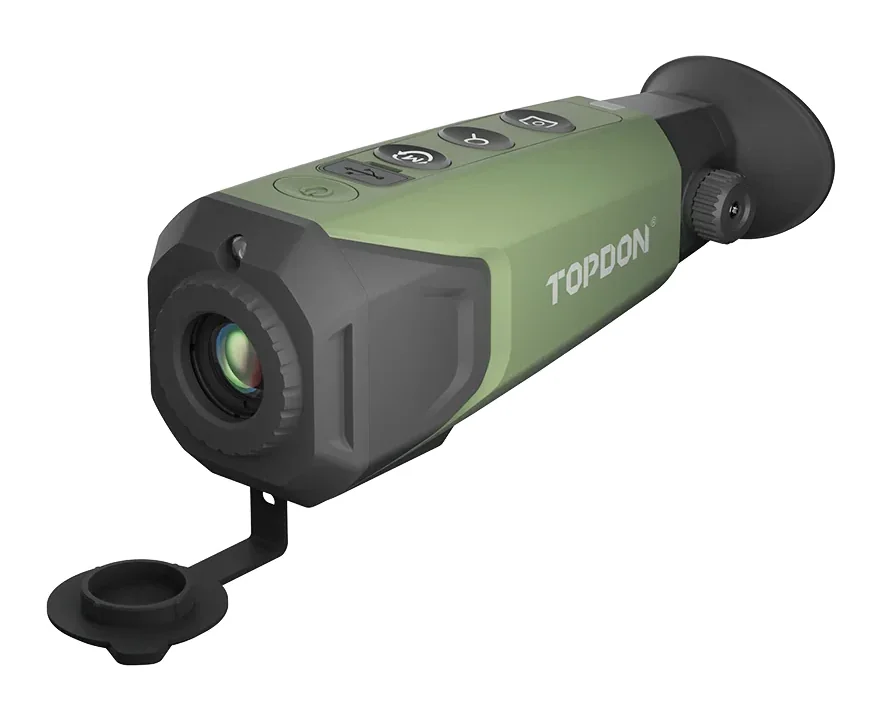 Thermal monocularTOPDON TS004
384×288: the sweet spot
The step from 256 to 384 is the one owners notice most: animals gain legs, ears and outlines instead of blobs. Prices in our list start at $799 (RIX Pocket K3 on sale), and the newer 12 µm sensors let a 19 to 25 mm lens reach well past typical hunting distances.
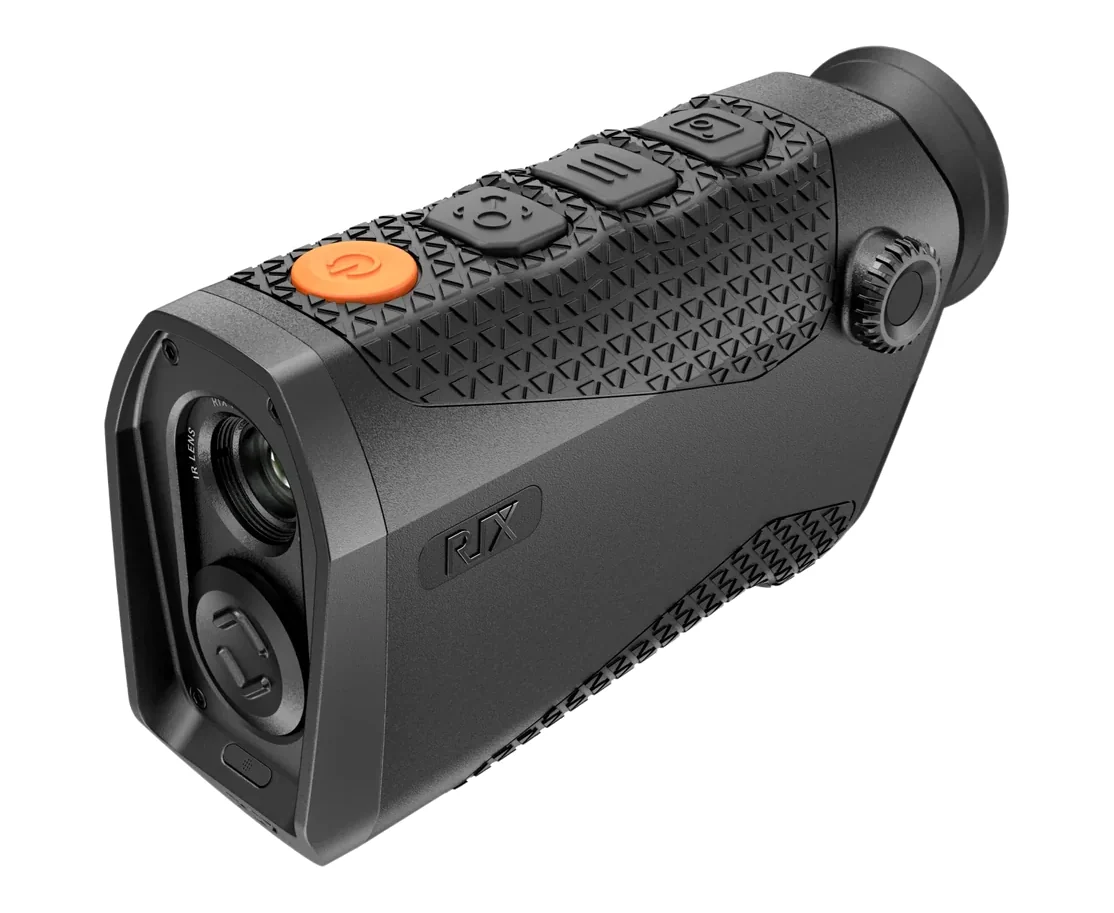
- RIX Pocket K3: 15 mm, 0.47 lb, 5-year warranty, $799 on sale.
- TOPDON TS004 Pro: 19 mm, up to 10 hours of battery, $899.
- AGM Taipan V2 19-384: 19 mm, below 20 mK, two batteries, $1,195.
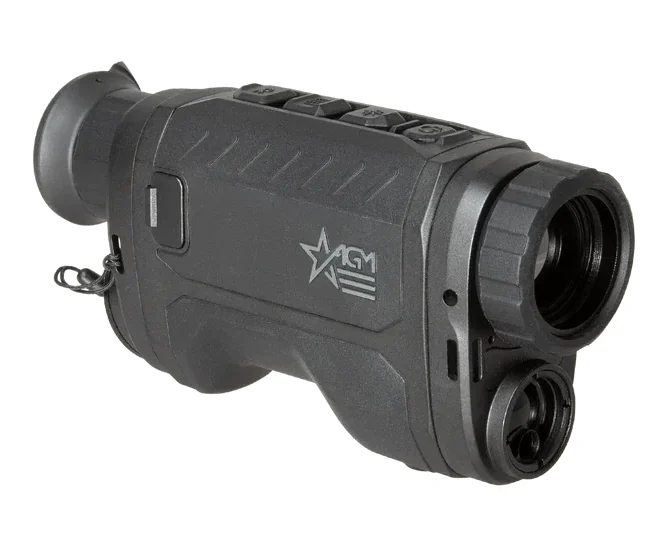
- AGM ReachIR LRF 25-384: 25 mm and a laser rangefinder, $1,895.
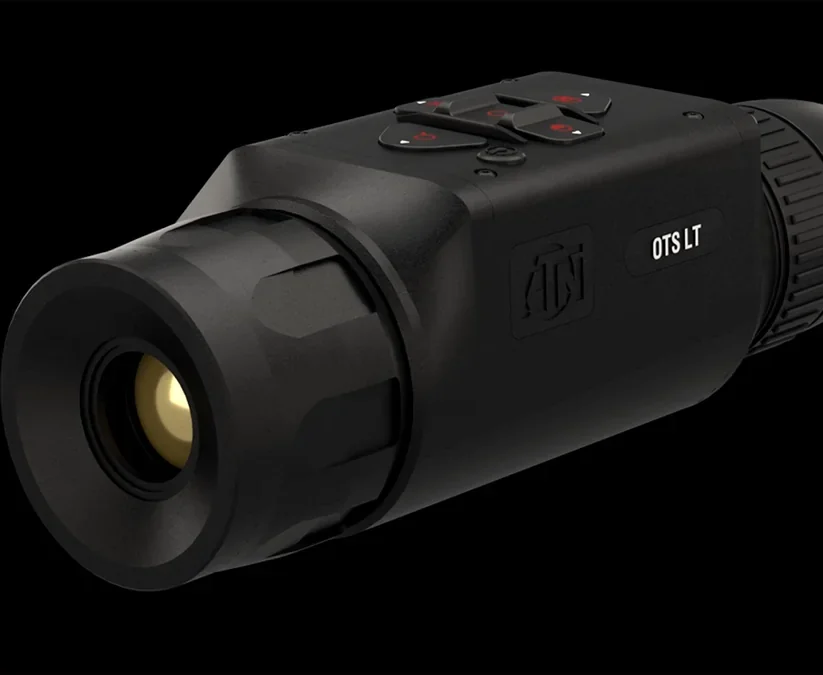
ATN OTS LT 320 3-6x8.5/10Read the review
640: when it is worth it
A 640 sensor earns its price when you glass wide, open ground, when you zoom a lot, or when you want to judge an animal before you walk toward it. In our list, every 640 model also carries a 35 or 50 mm lens and, in three cases out of four, a laser rangefinder, which is part of the price.
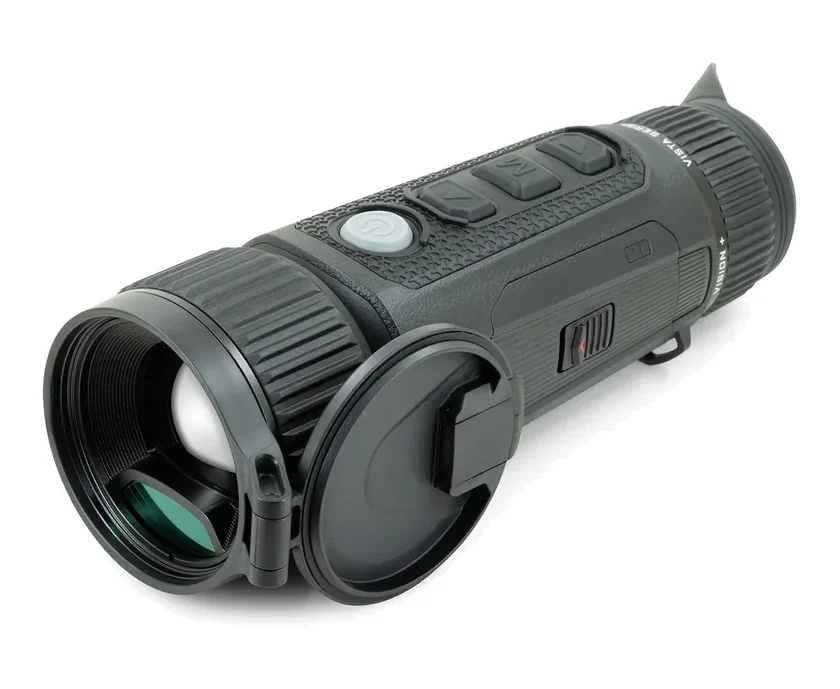
- Nocpix Vista H35R: 640×512 at ≤15 mK, our No. 1 overall, $3,300.
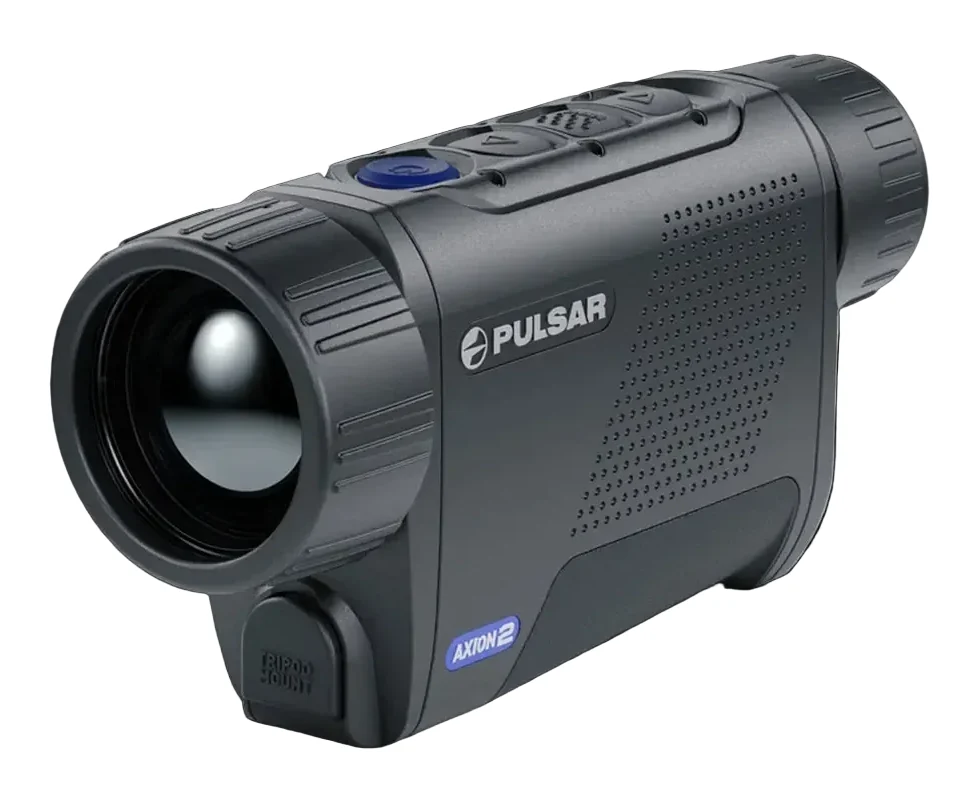
- Pulsar Axion 2 XG35: 640×480 in a pocket body, $2,499.97 (sold out at Pulsar US on Nov. 9).
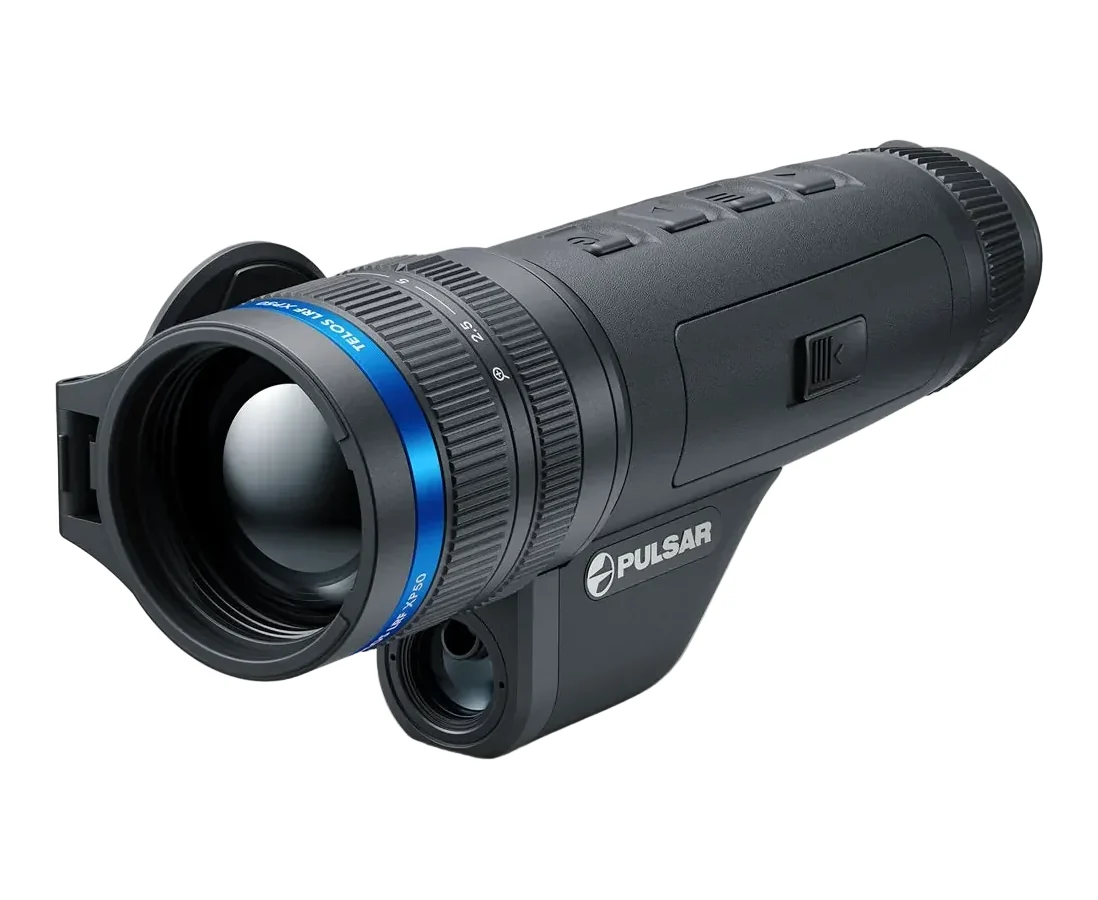
- Pulsar Telos LRF XP50: 640×480 with a 50 mm lens, No. 1 for hunting, $3,699.97.
Screens, upscaling and "super resolution"
Do not confuse the sensor with the display. The AGM Taipan V2 10-256 has a 1280×960 screen on a 256×192 sensor: the screen is sharp, the picture is still made of 49,152 thermal pixels. Some brands also advertise image enhancement modes (TOPDON calls its version TISR) that sharpen or smooth the picture. They can make the image nicer to look at; they do not add real thermal detail.
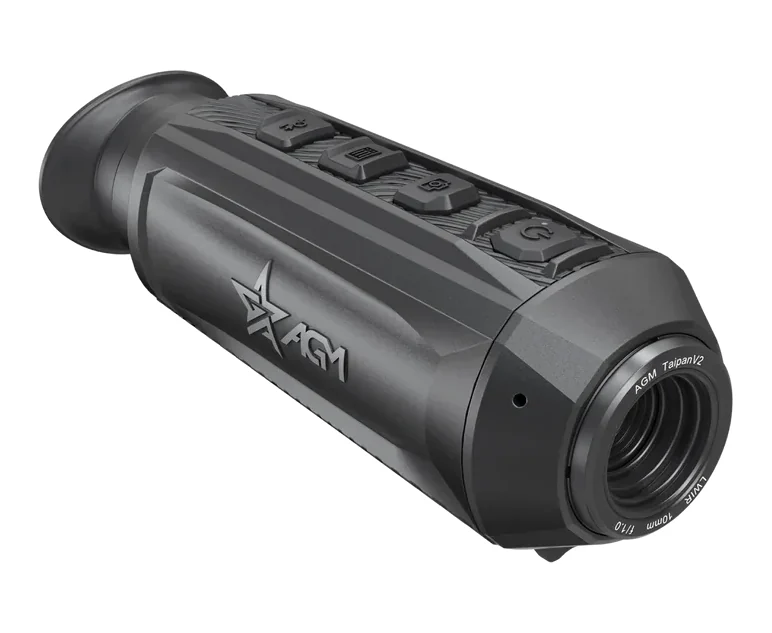 Thermal monocularAGM Taipan V2 10-256
Figures from official manufacturer pages and US prices checked on November 9, 2026. Images: manufacturers. How we score: see our methodology.
Our selection
Three rated monoculars mentioned in this guide, at checked prices.
Frequently asked questions
Is 384 better than 256 for a thermal monocular?
Yes. A 384×288 sensor has 2.25 times the pixels of a 256×192, so animals show more shape and detail at every distance. The difference is easy to see, which is why we call 384 the sweet spot.
Does a 640 thermal see farther than a 384?
Not with the same lens and pixel size. Reach depends on focal length divided by pixel pitch. The 640 shows a wider, sharper picture at the same distance and handles digital zoom better.
What is the best resolution for a thermal monocular for hunting?
For most hunting, 384×288 with a 19 to 25 mm lens. For open country and long-range calling, a 640 with a 35 mm lens or longer. See our hunting ranking.
Is 160×120 thermal resolution enough?
Only for very close range. At 19,200 pixels, details vanish within a few dozen yards; we do not include 160×120 models in our rankings.