How far can a thermal monocular see?
Detection, recognition and identification are three different distances: how to read the box figure and work out your own.
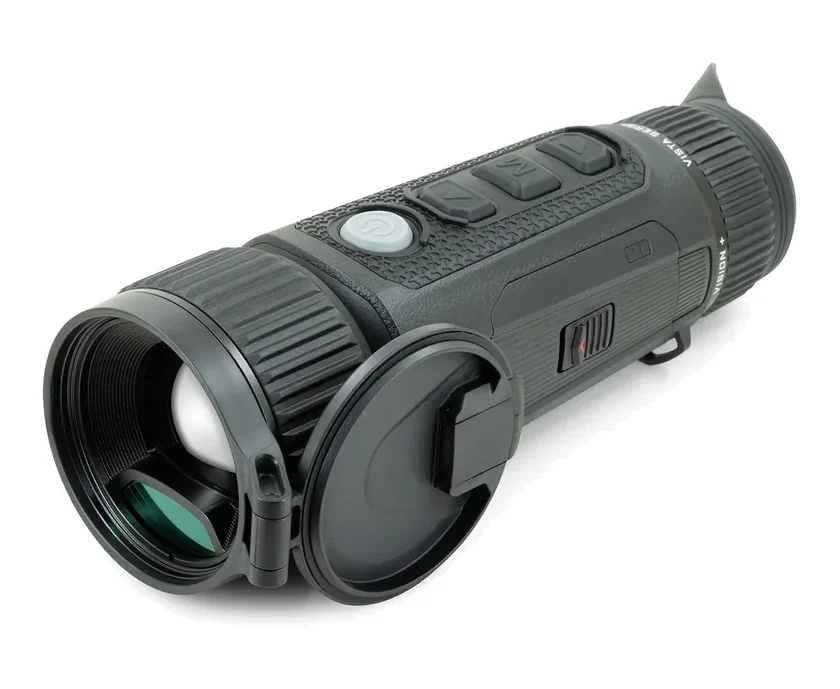
Nocpix Vista H35R9.0/10Read the review
Short answer: a thermal monocular can detect a person-sized heat source from about 1,000 m with a short 13 to 19 mm lens to more than 2,500 m with a 35 to 50 mm lens. But you only recognize what it is at about a quarter of that distance, and identify it (buck or doe, dog or coyote) at about a sixth. Brand "detection range" figures describe the first, easiest level.
Detection, recognition, identification
Spec sheets talk about "detection range" because it is the biggest number. Detection only means a few warm pixels stand out from the background: something is there. To act on it, you usually need more.
| Level | What you can tell | Pixels across the target | Share of detection distance |
|---|---|---|---|
| Detection | Something warm is there | About 2 | 100% |
| Recognition | What kind of thing: a person, a deer, a hog | About 8 | About 25% |
| Identification | Which one: buck or doe, coyote or dog | About 13 | About 15% |
Those thresholds come from John Johnson's work for the US Army in 1958, expressed in line pairs (one line pair = two pixels) and roughly 50% odds of success. They are a model, not a promise, but they are the same model the industry uses, so they let you compare devices on equal terms.
The formula behind every range figure
Each pixel on the sensor sees a small angle: the pixel pitch divided by the focal length. A target covers N pixels at the distance where its size, divided by that distance, equals N of those angles. Put simply:
distance = focal length ÷ pixel pitch × target size ÷ pixels required
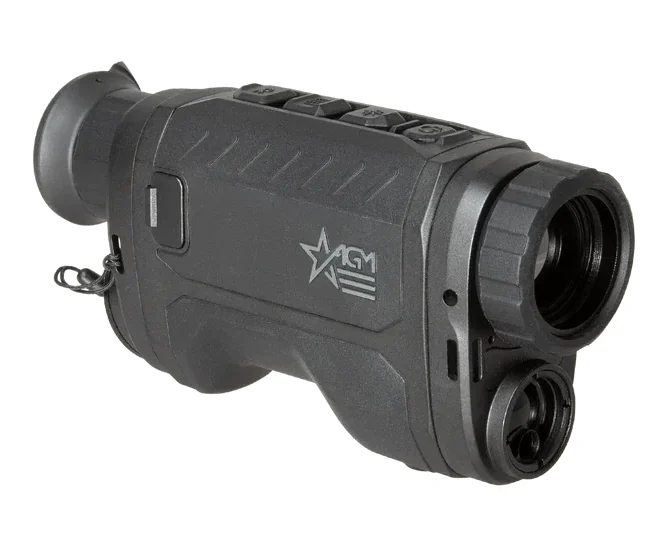
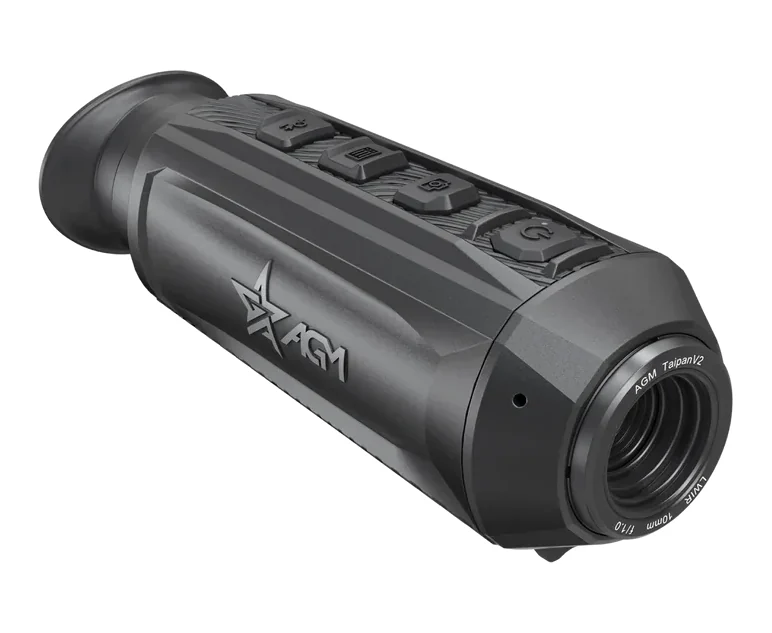
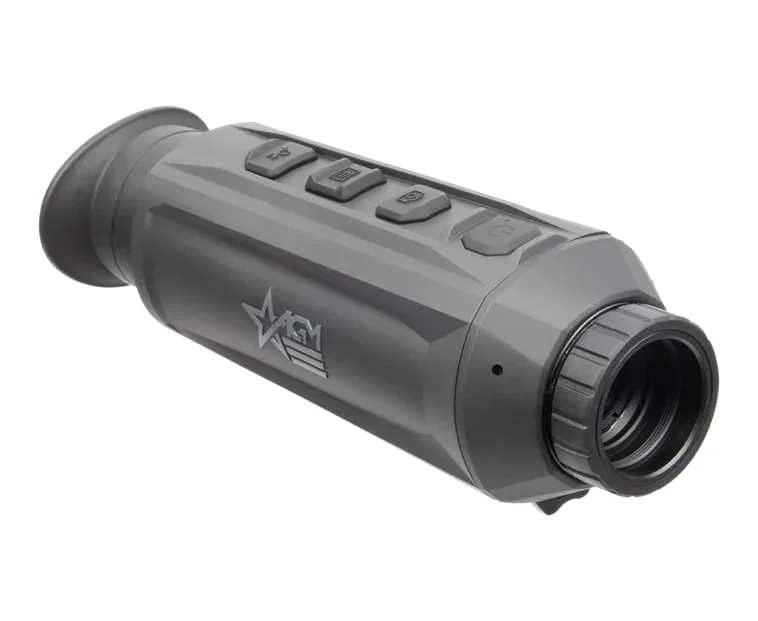
Example: the AGM Taipan V2 19-384 has a 19 mm lens and 12 µm pixels. 19 ÷ 0.012 = 1,583 pixels per radian. For a 1.8 m person and 2 pixels, that is 1,583 × 1.8 ÷ 2 = 1,425 m. For recognition (8 pixels), 356 m. AGM itself states 950 m for a 6 ft object, which matches 3 pixels on the same target: brands use slightly stricter thresholds than Johnson's 2 pixels, and that is fine.
Ranges of the 14 monoculars we compare
Person standing (1.8 m), from each brand's published lens and pixel pitch. The "brand figure" column is what the maker states, with its own target definition.
| Model | Lens / pitch | Detect | Recognize | Brand figure |
|---|---|---|---|---|
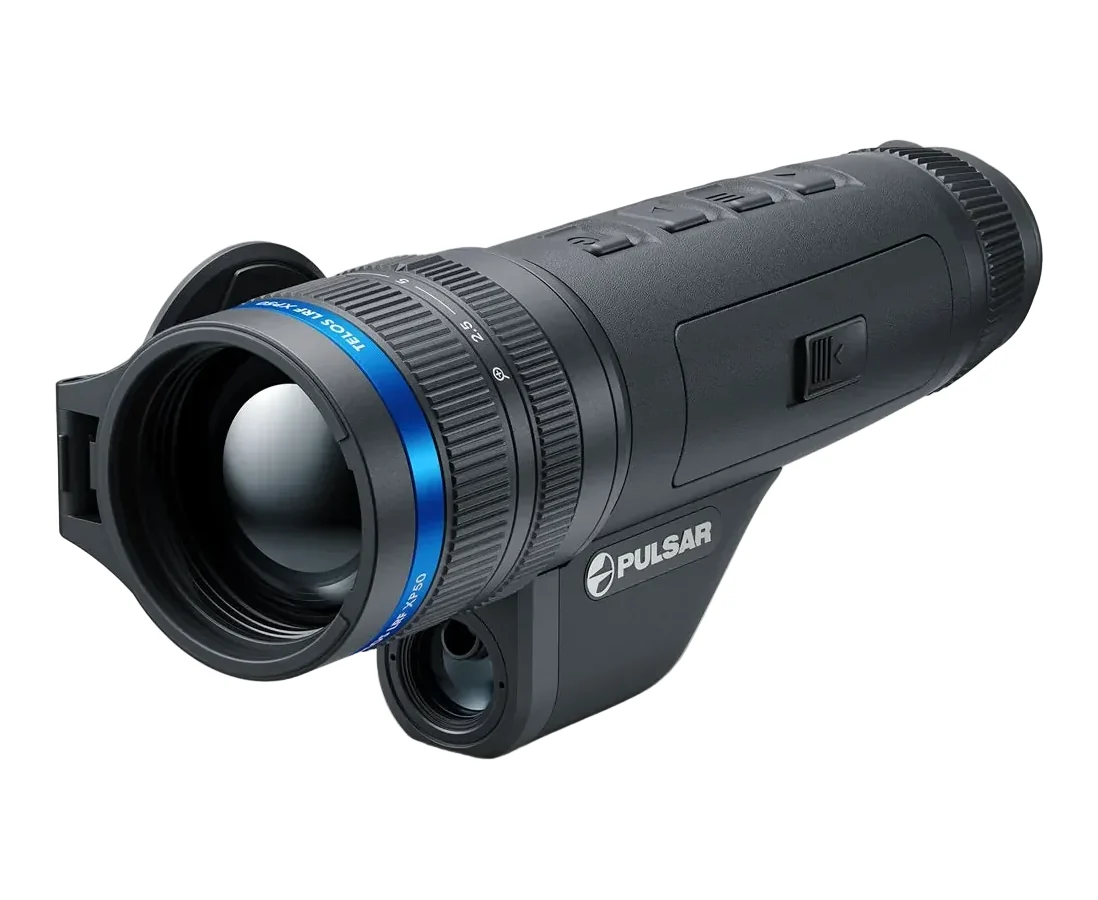
| Pulsar Telos LRF XP50 | 50 mm / 17 µm | 2,647 m | 662 m | 1,800 m |
| Nocpix Vista H35R | 35 mm / 12 µm | 2,625 m | 656 m | 1,800 m |
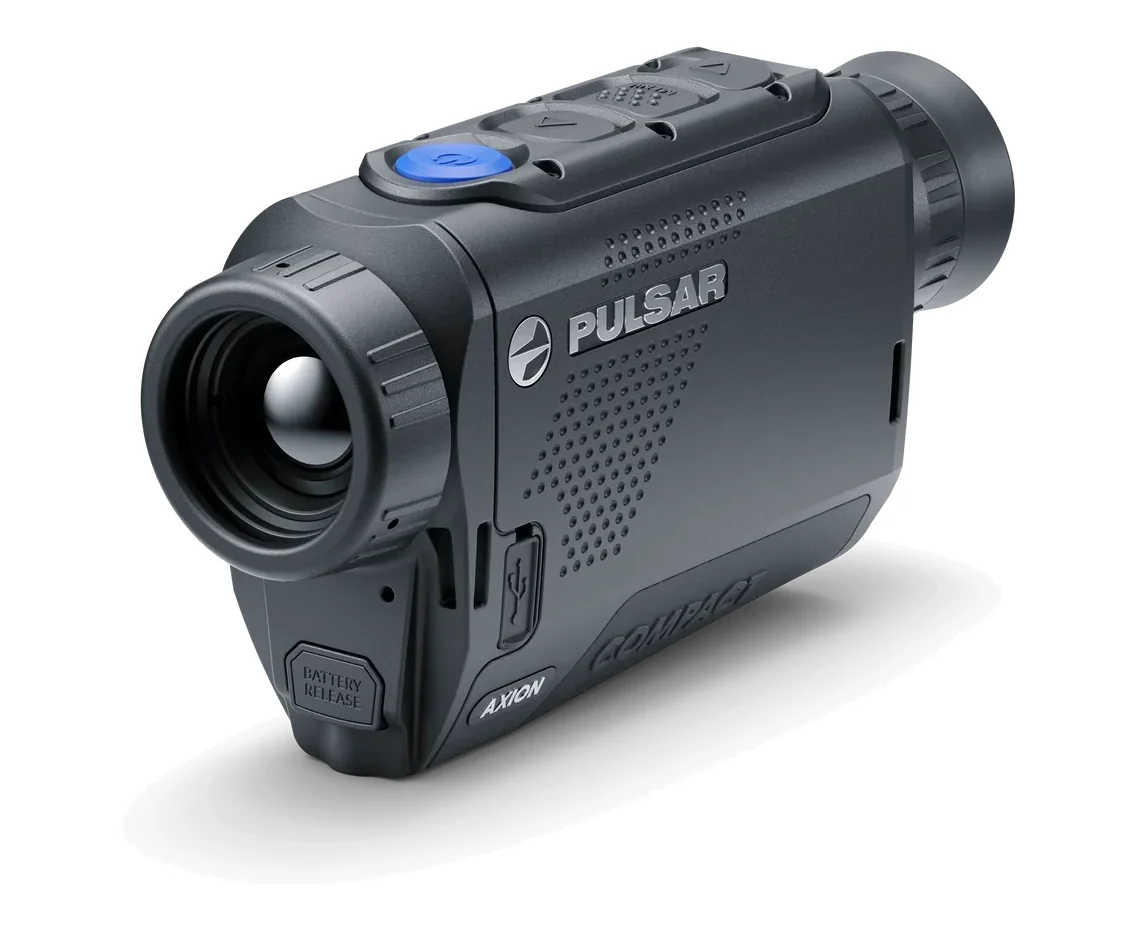
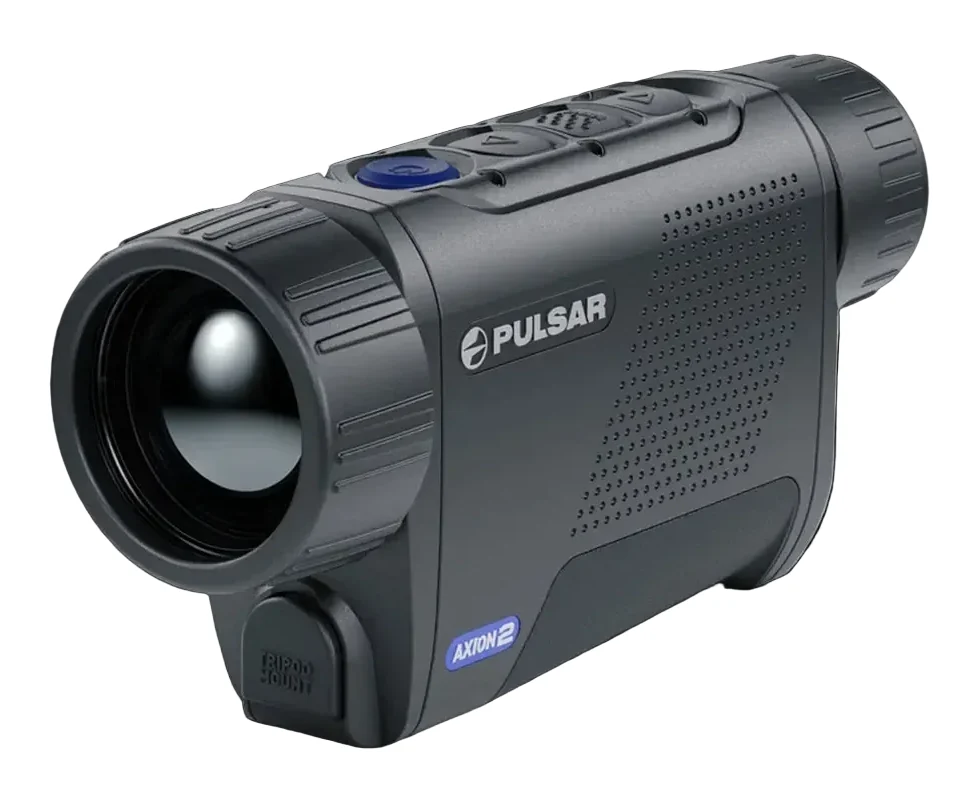
| Pulsar Axion 2 (LRF) XG35 | 35 mm / 12 µm | 2,625 m | 656 m | 1,750 m |
| Burris BTH35 v3 | 35 mm / 12 µm | 2,625 m | 656 m | 1,000 m (deer) |
| AGM ReachIR LRF 25-384 | 25 mm / 12 µm | 1,875 m | 469 m | 1,200 m |
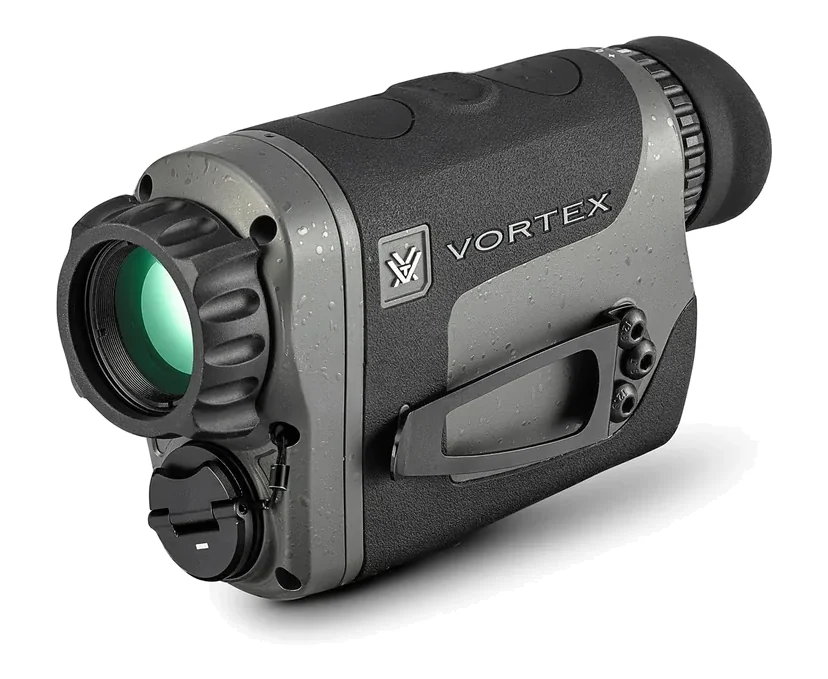
| Vortex Veil 400 | 25 mm / 12 µm | 1,875 m | 469 m | 1,006 m |
| AGM Taipan V2 19-384 | 19 mm / 12 µm | 1,425 m | 356 m | 950 m |
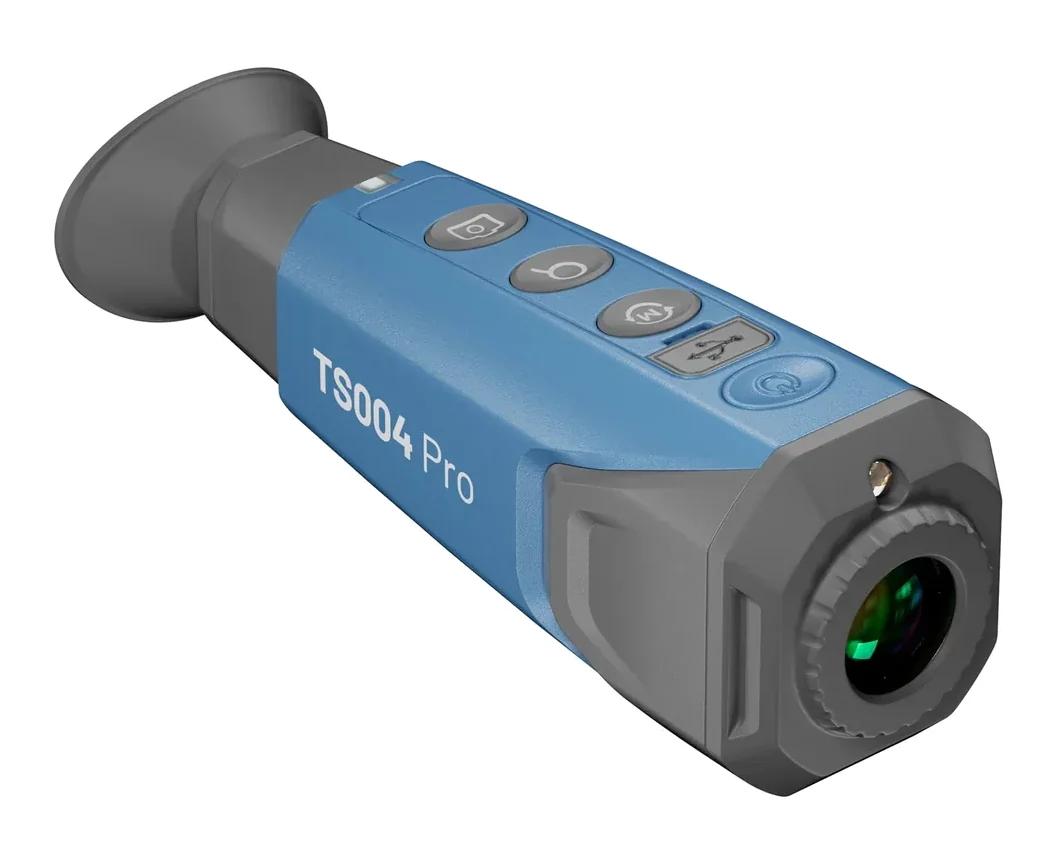
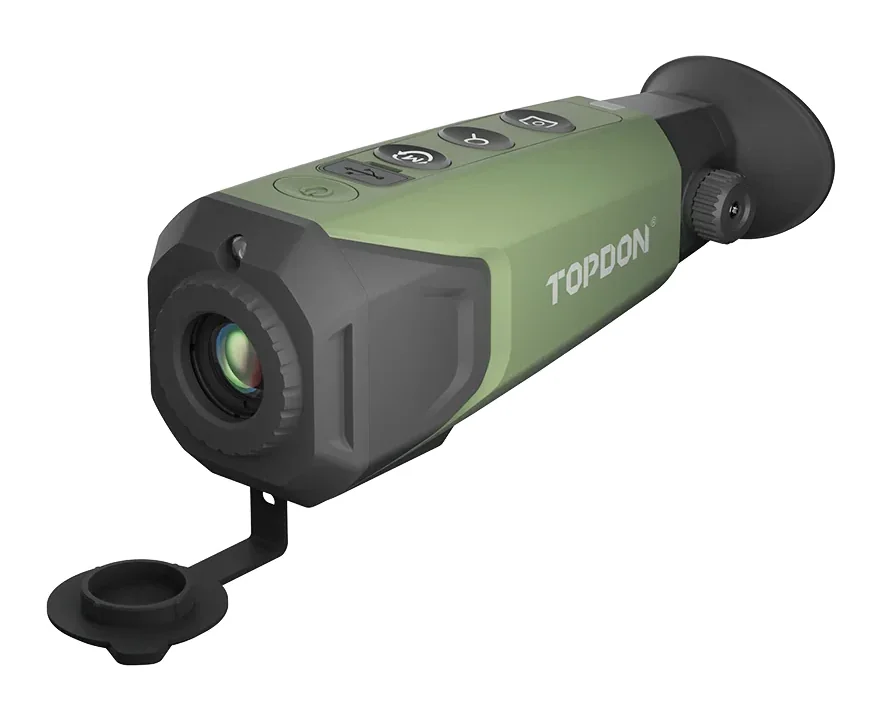
| TOPDON TS004 Pro | 19 mm / 12 µm | 1,425 m | 356 m | 594 m |
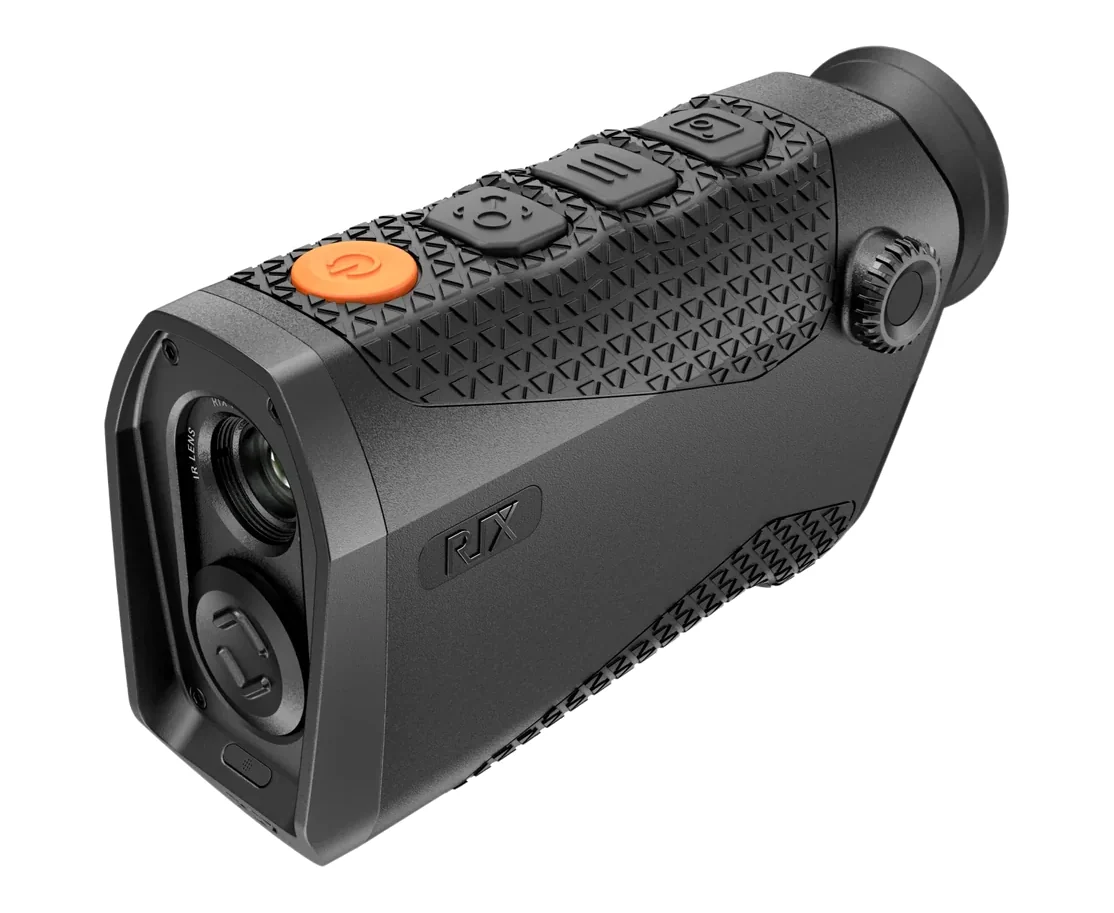
| RIX Pocket K3 | 15 mm / 12 µm | 1,125 m | 281 m | 780 m |
| Pulsar Axion XQ19 | 19 mm / 17 µm | 1,006 m | 251 m | 750 m |
| TOPDON TS004 | 13 mm / 12 µm | 975 m | 244 m | 410 m |
| AGM Taipan V2 10-256 | 10 mm / 12 µm | 750 m | 188 m | 500 m |
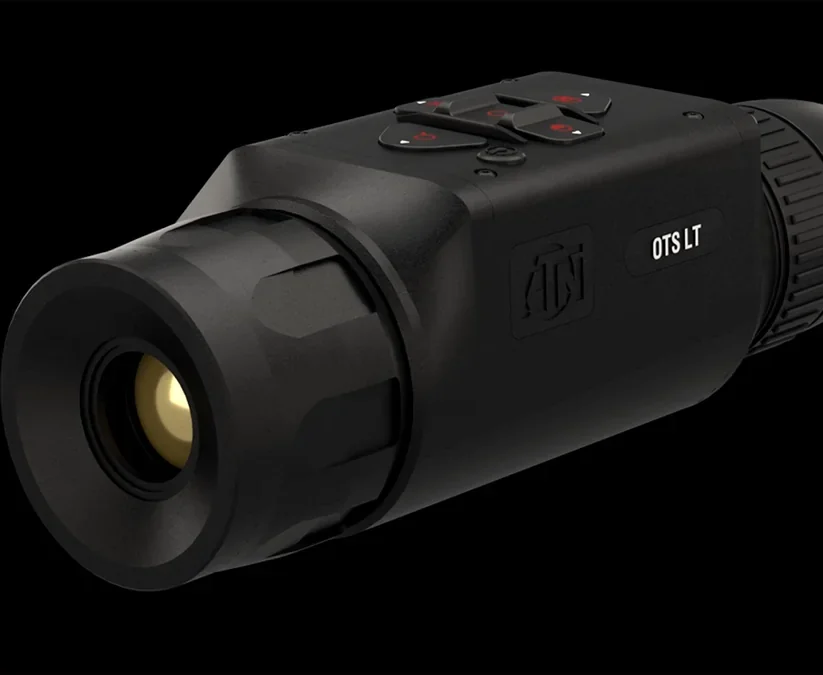
The ATN OTS LT 320 does not state its focal length; computed from its field of view (about 25 mm on 12 µm pixels), it lands with the 25 mm group. Notice how TOPDON quotes the most conservative figures of all: its own recognition figure for the TS004 is 100 yd for a person.
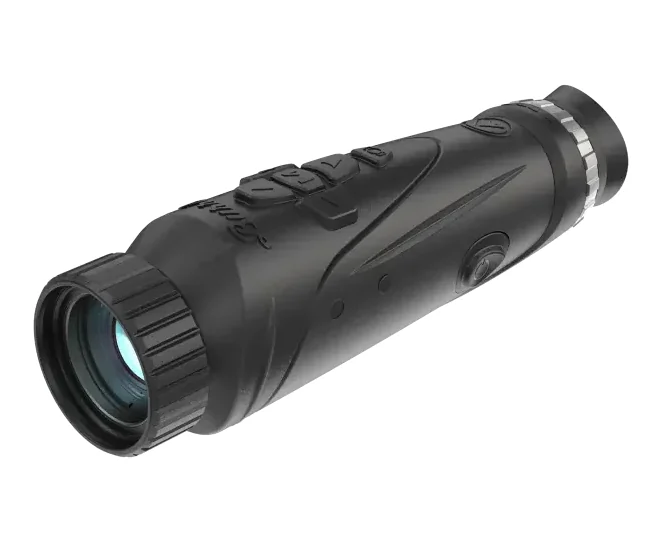
Burris BTH35 v38.4/10Read the review
What shortens the range in the field
- Humidity and rain. Water vapor and droplets absorb long-wave infrared. A muggy night in the Southeast costs real range; a dry, cold night in the Rockies gives the most.
- Fog. Thermal usually beats the eye in light fog or haze, but dense fog cuts it sharply.
- Small temperature contrast. A deer bedded in sun-warmed grass at dusk shows less than the same deer at 3 a.m. A low NETD sensor helps; see our specs guide.
- Partial cover. Thermal sees through gaps in thin brush, not through leaves. A half-hidden animal offers fewer pixels.
- Hand shake and zoom. Digital zoom enlarges pixels, it does not add them. Past 2x or 4x on a 384 sensor, the picture softens fast.
How to pick a lens for your ground
- Write down the longest distance at which you need to recognize an animal: across your food plot, your pasture, your pond.
- Use the calculator with the animal you care about (coyote, hog, deer) and the recognition level.
- Pick the shortest lens that covers that distance: a shorter lens gives a wider view, which matters in woods.
- If you need both, a long lens for fields and a wide view for timber, look at a 640 sensor with a 35 mm lens.
Figures from official manufacturer pages and US prices checked on November 9, 2026. Images: manufacturers. How we score: see our methodology.
Our selection
Three rated monoculars mentioned in this guide, at checked prices.
Frequently asked questions
How far can a thermal monocular detect a deer?
With a 19 mm lens on 12 µm pixels, about 1,270 m for detection of a 1.6 m-long deer and about 315 m for recognition, by Johnson criteria. With a 35 mm lens, about 2,330 m and 585 m. Real conditions shorten those figures.
Why is the advertised detection range so long?
Because it describes detection, the easiest level: a few warm pixels on a large target in good conditions. Recognition, the level where you know what you are looking at, happens at about a quarter of that distance.
Does zoom increase thermal range?
Digital zoom does not: it enlarges the existing pixels. Only a longer lens (or smaller pixels) puts more pixels on a distant target.
How far can thermal see in fog?
In light fog or haze, usually farther than the eye. In dense fog or heavy rain, range drops sharply because water absorbs long-wave infrared. There is no fixed figure: it depends on the droplet density.